Youth Justice System
Foresight-led project
Reimagining Youth Rehabilitation
This project explores how a future system could support young offenders in ways today’s structures struggle to achieve.
Applying service design methodologies based on speculative design, this project envisions new pathways for youth rehabilitation in 2040 by exploring plausible future scenarios and mapping emerging risks. This approach informed the creation of Turning Point, a cross-sector rehabilitation programme centred on trust-based mentorship, early intervention, and community reintegration.
This case study demonstrates how speculative and service design can support long-term thinking in public services by enabling institutions to become more proactive, human-centred, and resilient in the face of the future.

Project Overview
Reimagining youth rehabilitation through ethical AI, stability support, and system change.
Partnering with the Ministry of Justice, this project explores the future of youth rehabilitation by 2040, considering the impacts of digital surveillance, social isolation, and institutional strain on youth vulnerability. By applying foresight methods and mapping stakeholder systems, I identified structural gaps and resilient intervention points. The proposed early-intervention model combines stability support, ethical AI reflection tools, and community reintegration strategies. This work guides policy readiness, strengthens cross-agency collaboration, and outlines a future service ecosystem designed to reduce reoffending rates.
Problem Framing
Youth offending in the UK shows a consistent pattern:
Most young people imprisoned by age 24 first offended before 16.
(Youth Justice Board & Ministry of Justice, 2024)
Once in the justice system, they often encounter stigma, fragmented support, and a lack of trusted relationships. Each of these factors statistically increases their chances of reoffending.
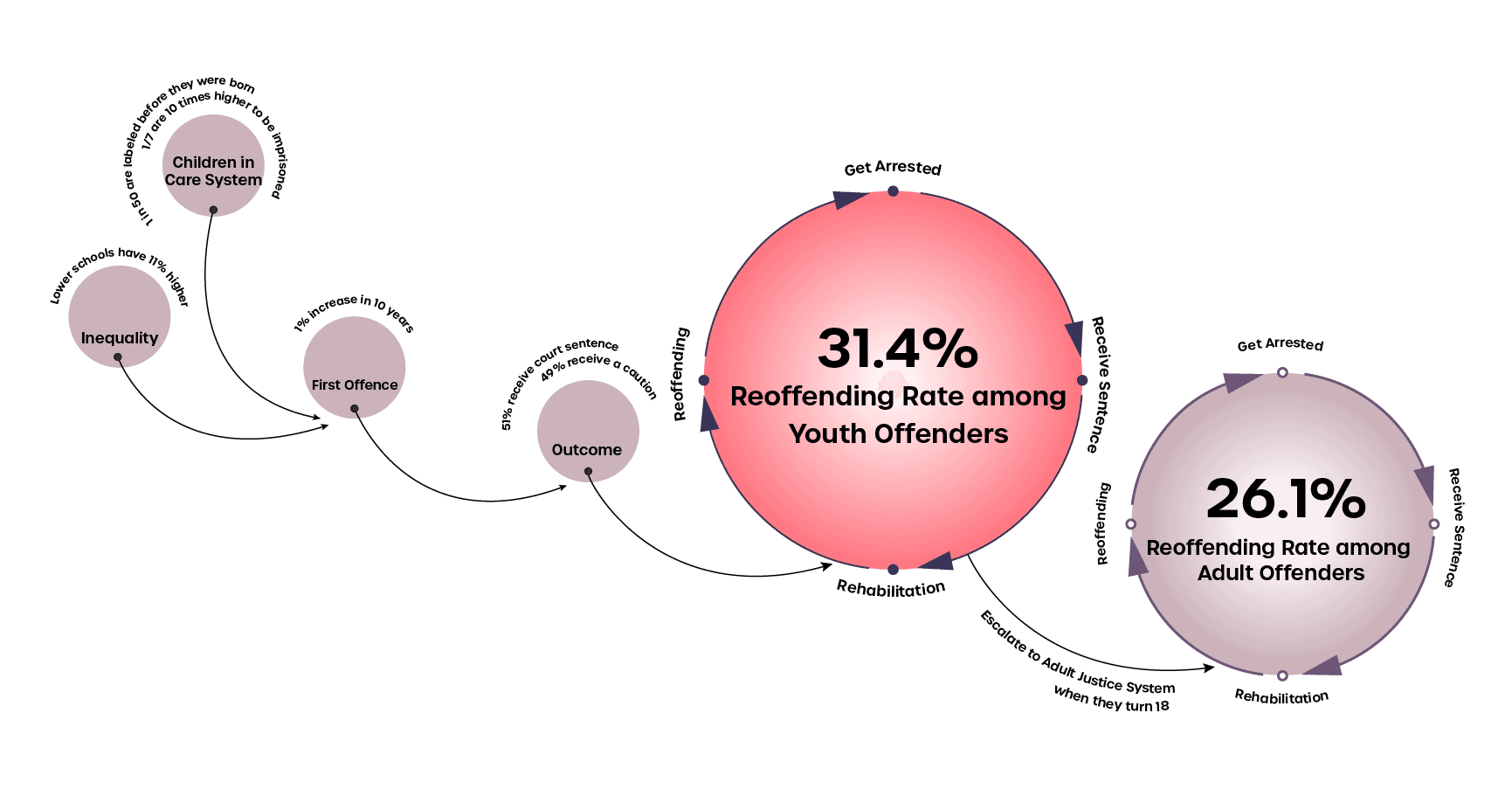
01
Journey Map
Structural inequality and late intervention in youth justice frequently keep young people reoffending instead of rehabilitating.
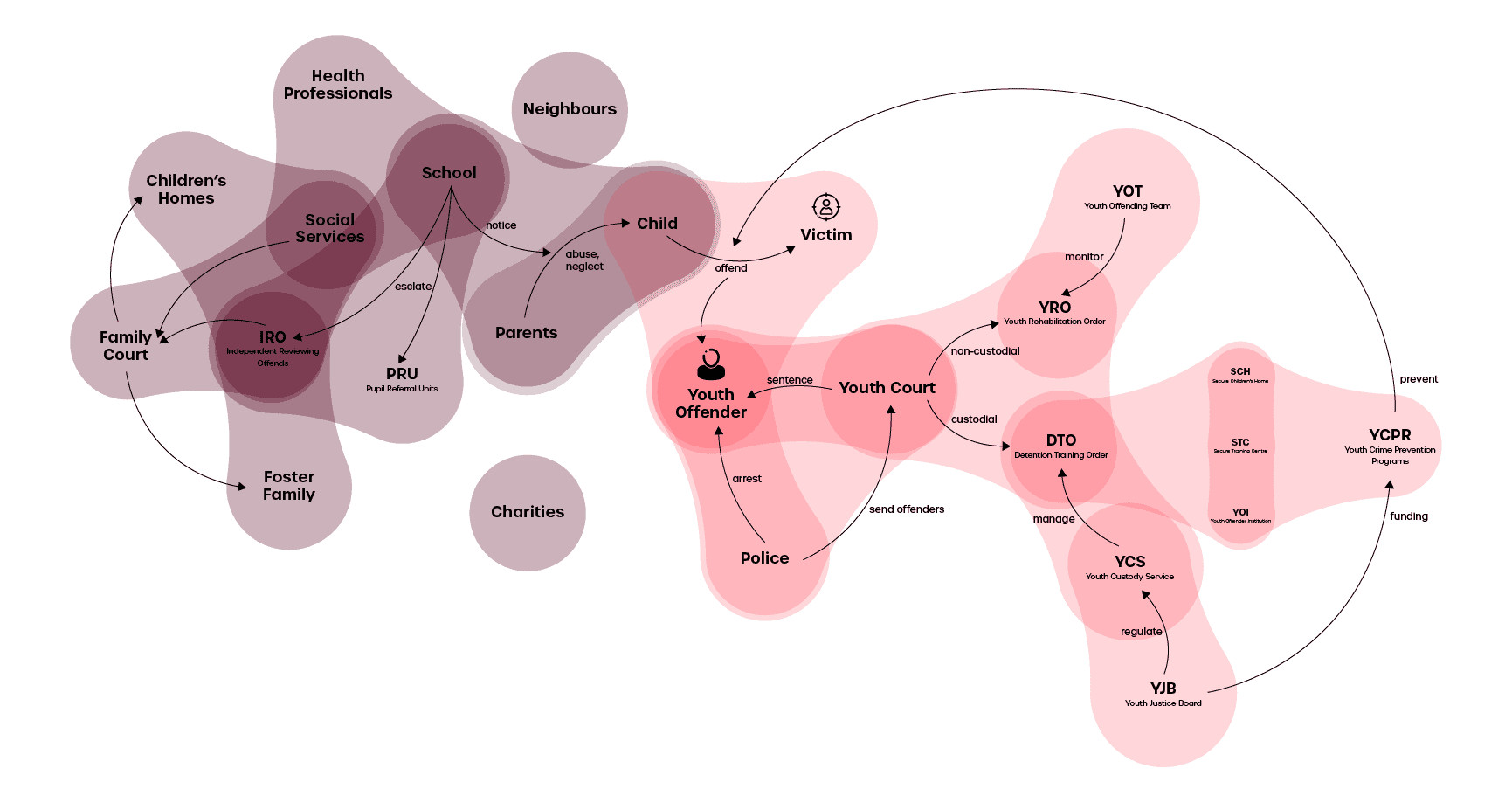
02
Stakeholder Map
A fragmented ecosystem where agencies operate in silos, causing duplication, unclear roles, and critical support gaps for youth.
Our Approach
Speculative Service Design
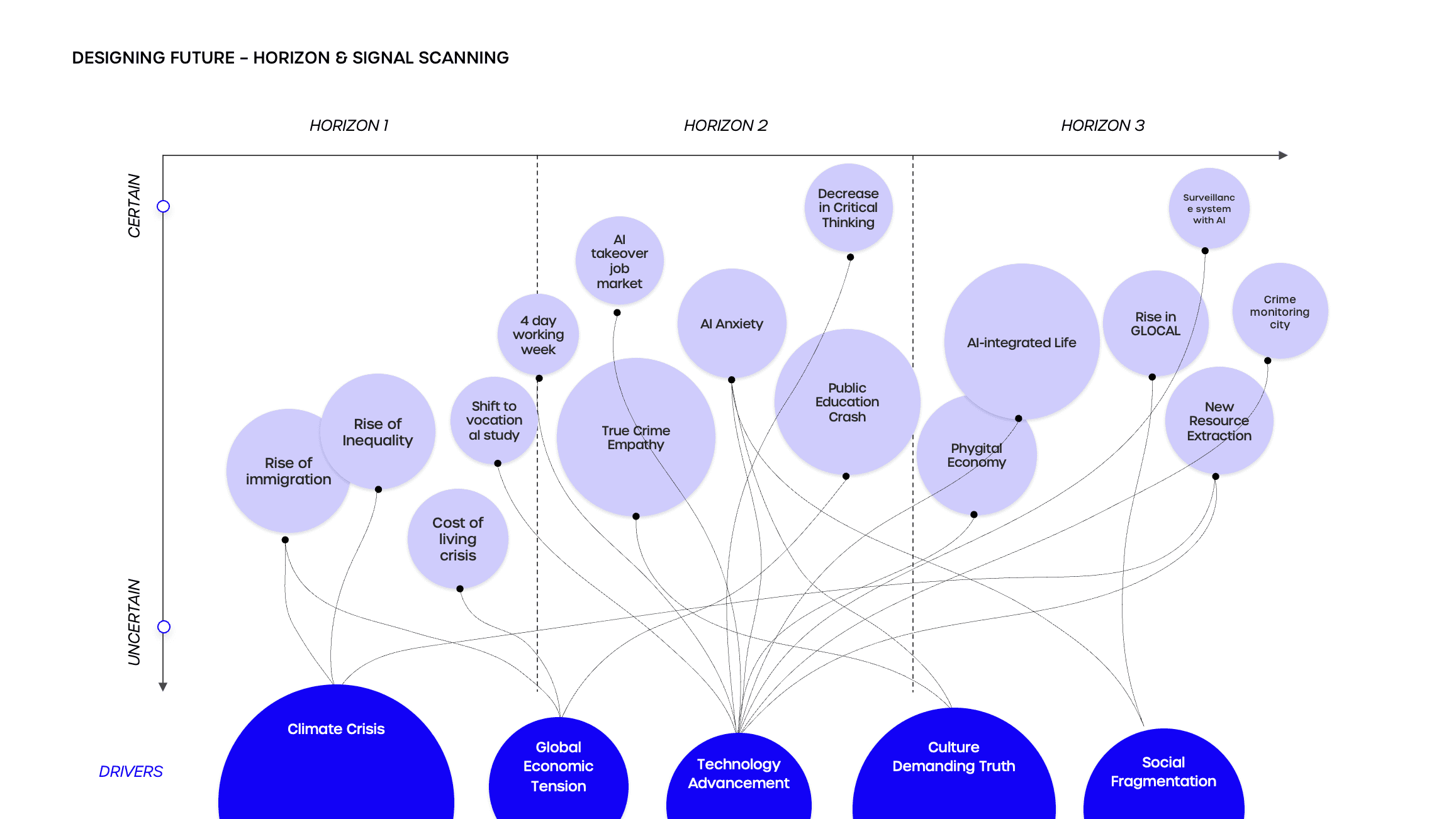
By 2040, these challenges are expected to intensify due to:
(01) Permanent digital footprints reinforcing social stigma
(02) Increased social isolation among vulnerable young people
(03) AI-driven policing and sentencing creating distance rather than trust
(04) Systemic workload pressures reducing human contact
Given the project’s future horizon and complexity,
we applied a product-strategy lens
to speculative and service design tools.
We focused on four questions:
What long-term societal changes will shape future youth behaviour and vulnerabilities?
(Horizon Scanning, Three Horizons)How will these shifts change the needs, risks, and motivations of young offenders?
(Future Personas, Scenario Modelling)What early-intervention opportunities remain resilient across multiple futures?
(Opportunity Mapping, Causal Loop Analysis)What strategic options could guide MoJ’s long-term planning?
(Backcasting, Decision Frameworks)
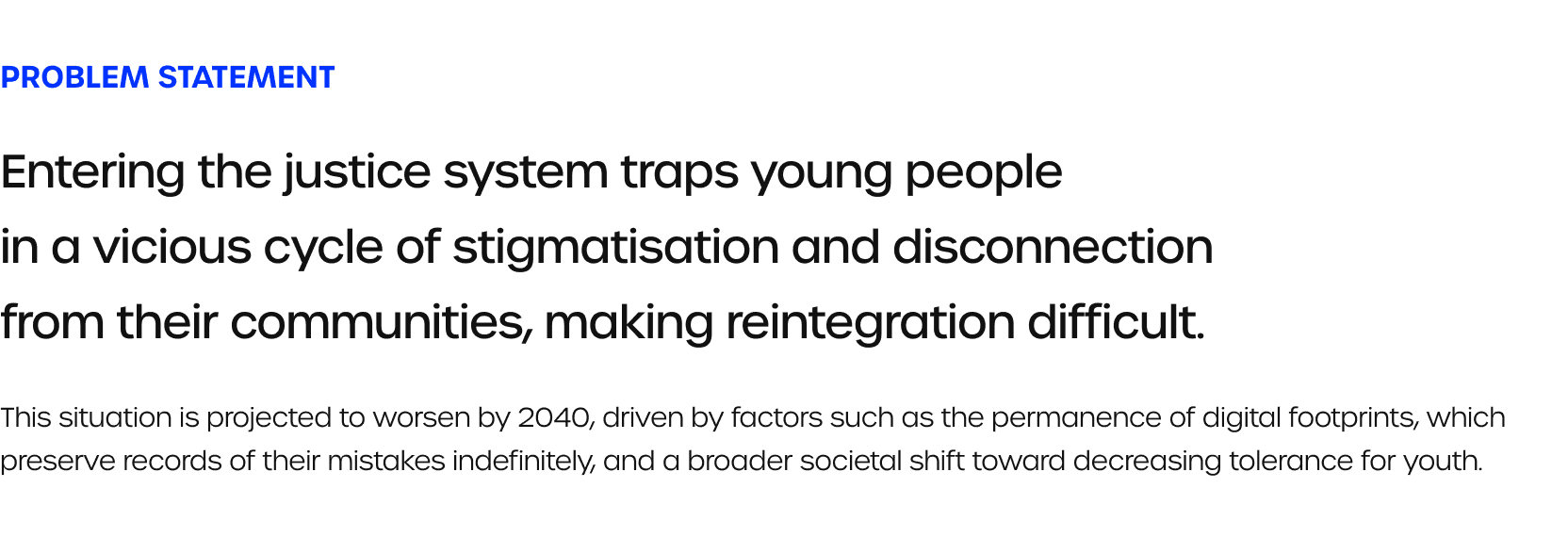
Problem Defining
This is not simply a behavioural issue.
It is a systemic failure to support vulnerable young people at the moment when they need stability and relational care the most.
Intervention Rationale
By defining a preferable future for youth justice, this project shifts focus
from reactive punishment to proactive prevention.
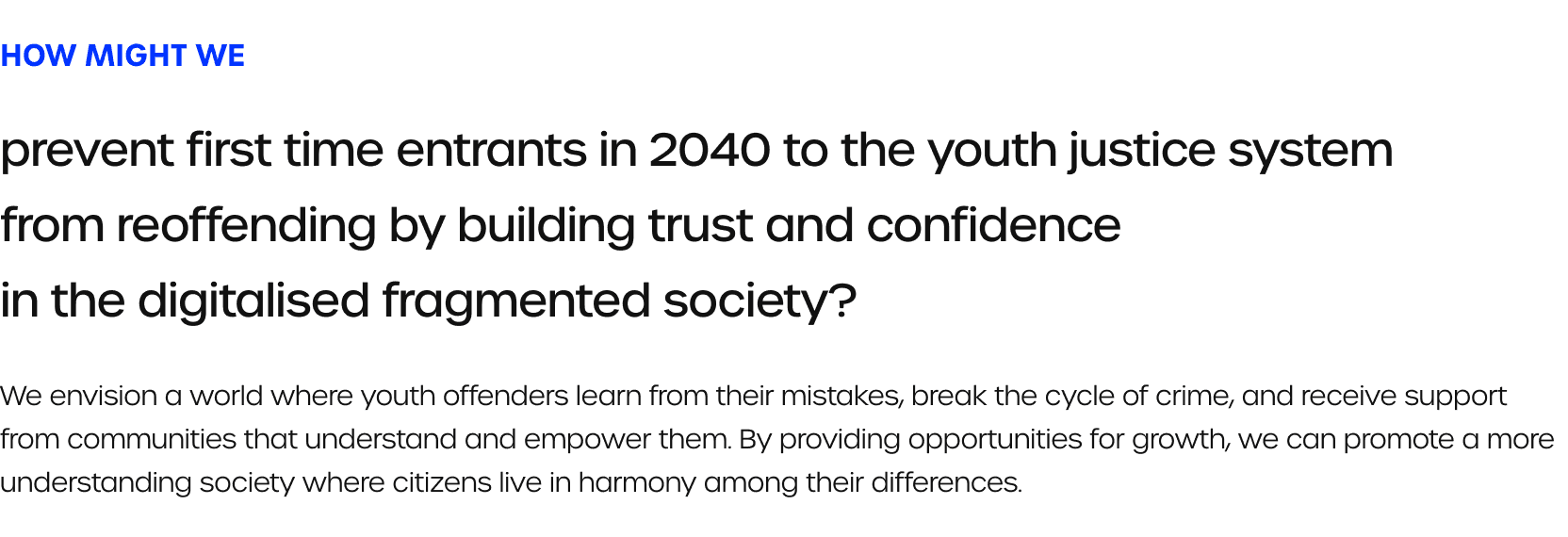
Current youth justice approaches typically intervene only after offending has escalated, at which point stigma, mistrust, and systemic entrenchment are already deeply embedded. This reactive approach neglects a critical window at the moment of first-time entry, when young people are most vulnerable and simultaneously most receptive to support and redirection.
This project reframes early intervention as a strategic design opportunity rather than a remedial measure.
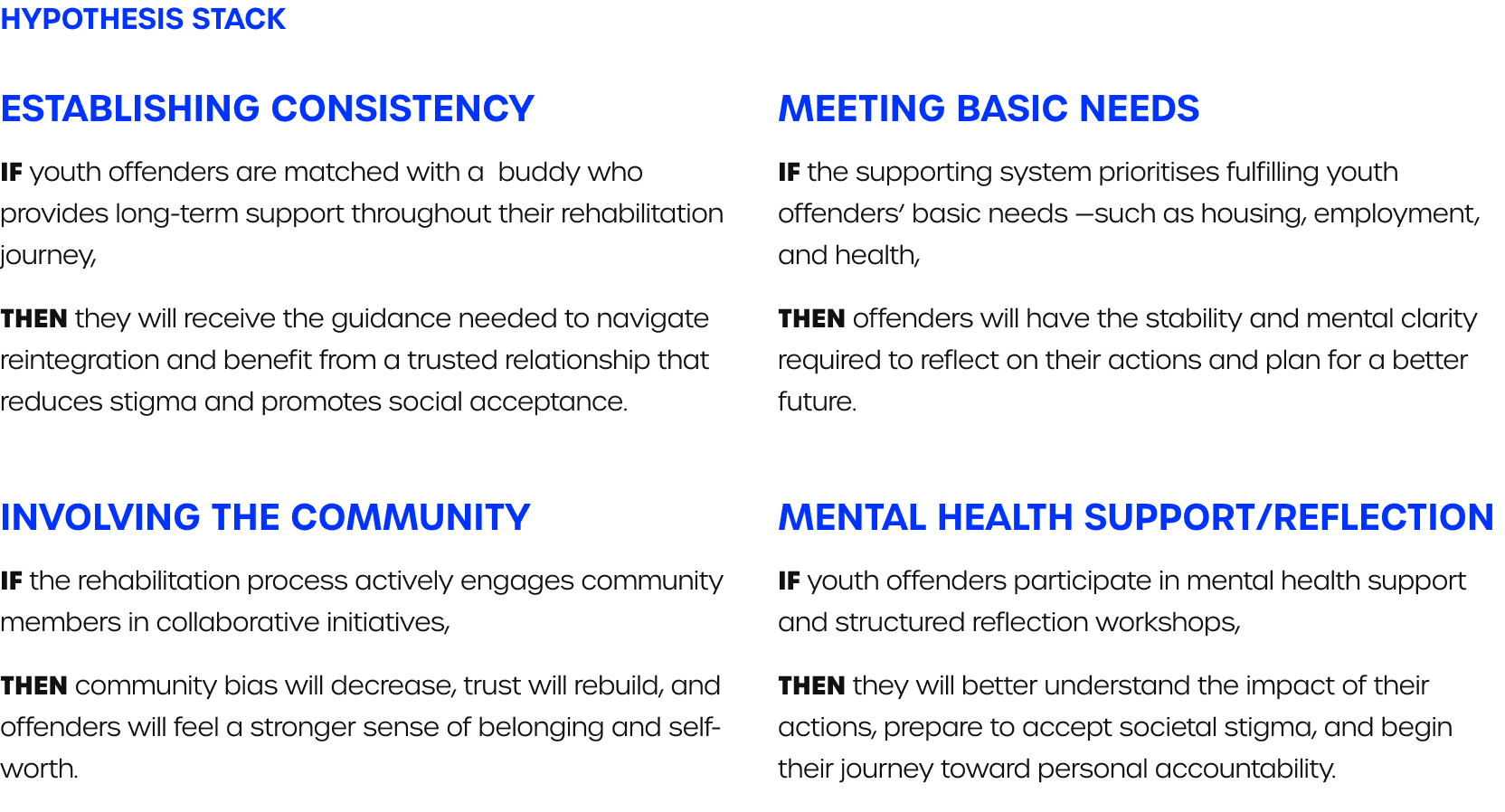
We assume that trust-building support delivered immediately after a first offence can disrupt trajectories of reoffending before they solidify. From this assumption, we developed a set of layered hypotheses to clarify where, how, and why intervention should occur. If provided in a timely manner, supportive services at this point are more likely to help young people remain engaged, rebuild confidence, and reintegrate, reducing long-term harm to both individuals and the system as a whole.
Proposed Service Model
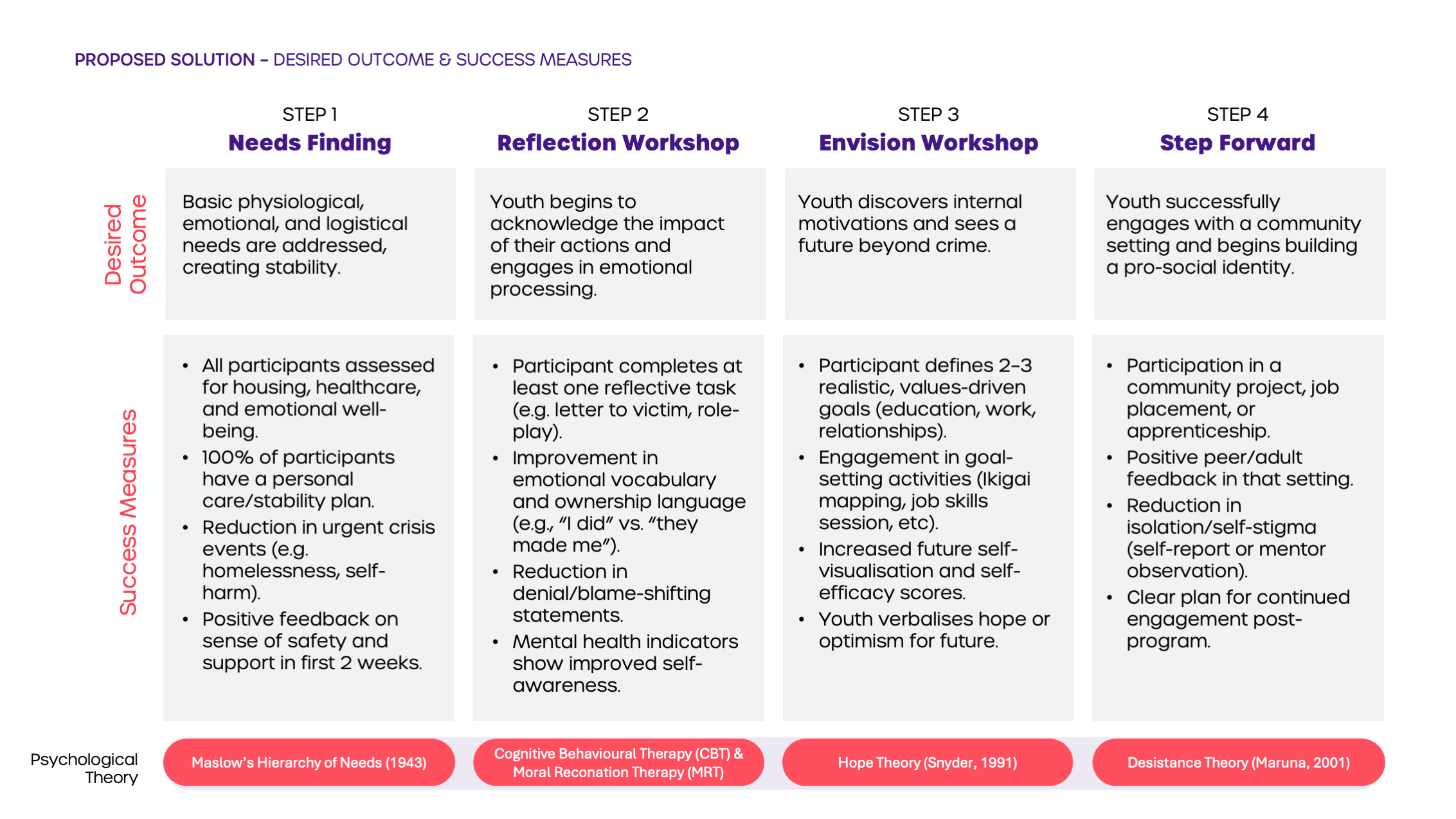
The program follows a structured, intensive 1-3 month journey, designed to support youth offenders in rebuilding their lives through human connection, self-reflection, and real-world engagement.
Stability & Support: The first step ensures that basic needs, such as housing, healthcare, and emotional well-being, are met. Each participant receives personalised support, laying the foundation for a stable future before deeper rehabilitation begins.
Reflection & Accountability: Through guided workshops and mental health support, participants reflect on their past actions, the impact of their crimes, and the harm caused to victims. This stage fosters self-awareness, accountability, and emotional growth.
Future Vision & Goal Setting: In envision workshops, participants explore career paths, develop life goals, and build skills that align with their aspirations. This helps them shift their focus from past mistakes to future potential.
Community Reintegration: Finally, participants apply their newly developed skills in real-world settings, engaging in community projects, apprenticeships, and work placements to rebuild trust and reintegrate into society.
By combining personalised support, human mentorship, and hands-on experience, this intensive program empowers youth offenders to break the cycle of crime and take control of their futures.
How it works
Modular Intervention
Designed a modular intervention system that enables personalised pathways within fixed public-sector constraints.
The Modular Intervention Matrix is a decision-support framework that enables personalised youth justice pathways within public sector constraints. Unlike traditional linear programmes that apply the same interventions to all first-time offenders, this system uses lightweight, observation-based assessments—such as housing stability, trauma indicators, social isolation, and offence nature—to generate tailored intervention recommendations. The matrix translates these qualitative inputs into consistent, auditable decisions about mentor type, module sequencing, contact intensity, and safeguarding boundaries, while preserving human accountability through caseworker oversight. Each of the four service modules (Needs Finding, Reflection Workshop, Envision Workshop, Step Forward) functions as a reusable component that can be combined, extended, or accelerated based on individual need states rather than offence categories. This approach operationalises the Youth Justice Board's Child First principles by treating personalisation not as full customisation—which doesn't scale—but as structured flexibility: the matrix codifies expertise, ensures consistency across distributed delivery teams, and makes risk considerations explicit and reviewable at every stage. The result is a service that can respond to the distinct needs of someone experiencing homelessness and high trauma differently from someone with stable housing but limited social skills, all while maintaining the standardised measurement and multi-agency coordination required for public sector accountability.
Impact, Theory of Change
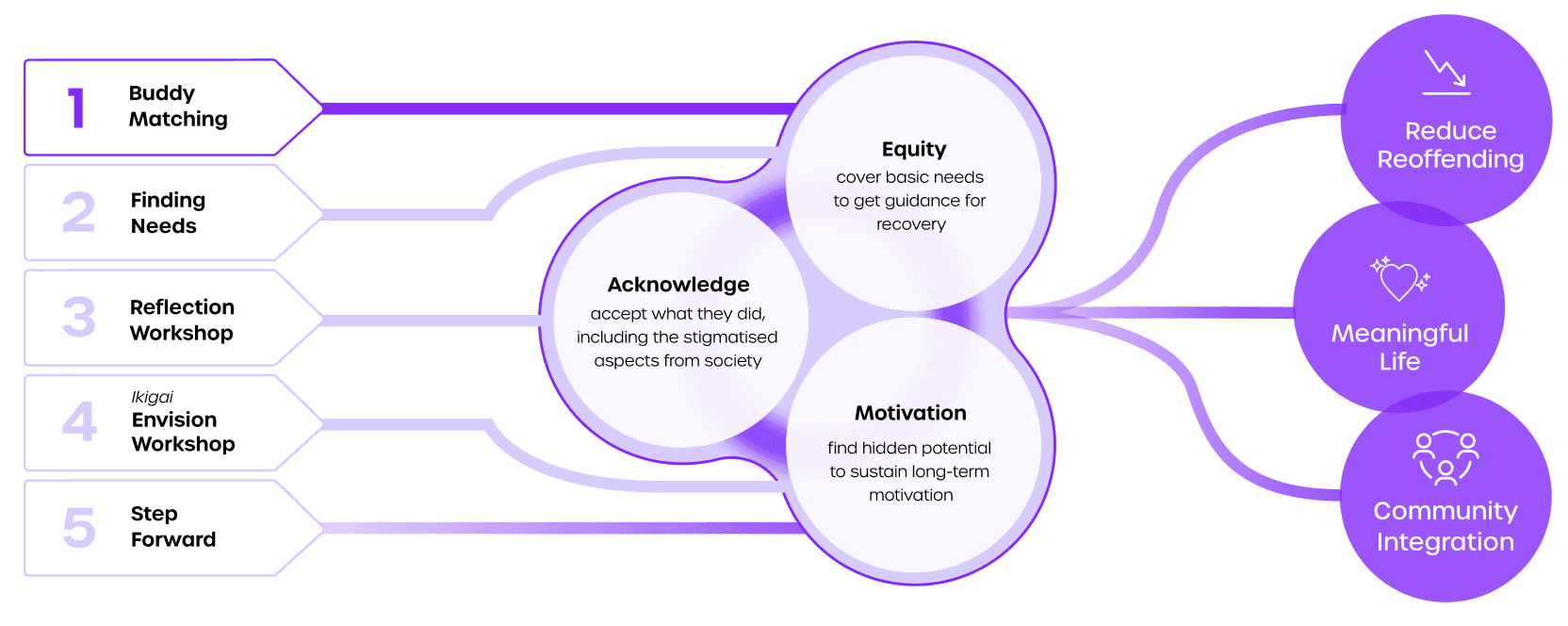
The Theory of Change (ToC) maps how specific actions or interventions can lead to long-term outcomes. It visualises causal pathways and supporting assumptions to guide implementation and evaluation.
In our context, the Theory of Change for youth justice focuses on creating a proactive, early intervention system that prevents young people from escalating into more serious criminal behaviour. The ToC begins with the assumption that early intervention, such as providing support services immediately after a first-time offence, can prevent further criminality and reduce the long-term impact of youth offending.
Ethical Considerations
Designing within youth justice required explicit ethical positioning. Drawing on Rawls’ concept of justice as fairness, the intervention prioritises early support to mitigate structural disadvantage rather than reinforcing punitive cycles. The programme reframes first-time offending as a point for equitable intervention, not permanent exclusion.
The integration of AI-enabled reflection tools raised additional concerns around bias, transparency, and power. To avoid technological determinism, AI was positioned as assistive rather than authoritative, with human mentors maintaining decision-making responsibility.
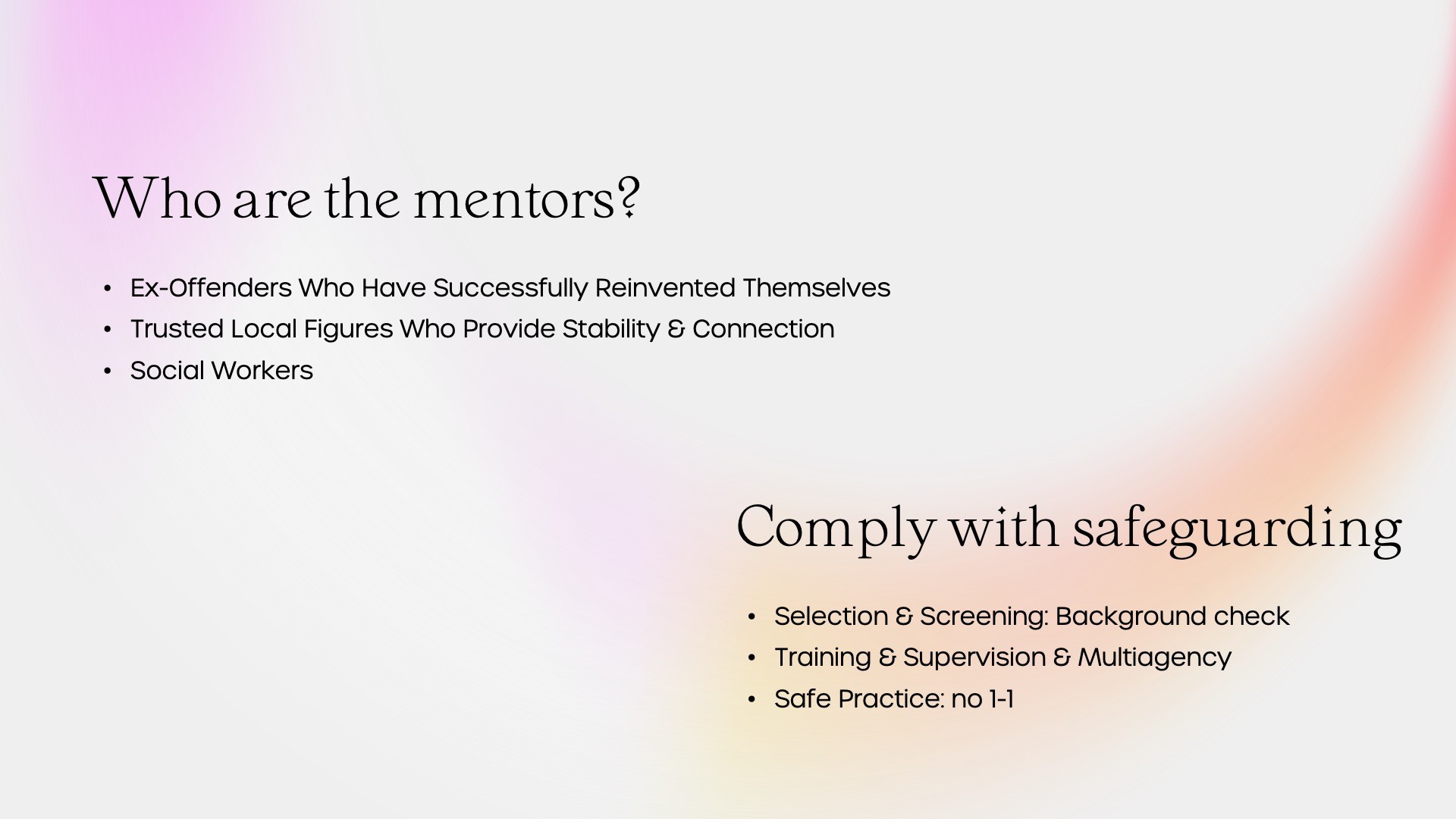
Given the vulnerability of young participants, trauma-informed principles guided the design of workshops and mentorship structures. Safeguarding protocols and multi-agency oversight were embedded to reduce power imbalances and prevent harm.
In a future shaped by surveillance and digital permanence, ethical design must actively resist reinforcing stigma. The programme therefore seeks to restore relational trust rather than institutional control.
Learnings
Designing Beyond the Artefact
This project reinforced that service design in public systems extends beyond concept generation. While speculative methods surfaced long-term risks and shifting values, their relevance emerged only when translated into operational structures such as stakeholder alignment, safeguarding protocols, and a clear Theory of Change.
I learned that foresight becomes actionable only when grounded in causal logic. Moving from scenario-building to hypothesis stacks and blueprinting demonstrated how future thinking can inform present-day service architecture.
Working within youth justice also sharpened my understanding of designing under ethical and statutory constraints. Safeguarding, power asymmetries, and institutional mistrust directly shaped the intervention. In high-risk environments, innovation must remain accountable and trauma-informed.
Ultimately, this project strengthened my ability to operate at a systems level. Rather than designing isolated touchpoints, I focused on repairing fragmentation between justice, education, and community actors. Service design became relationship architecture, not interface design.