Service Design
Research Synthesis
Digital Prototyping
A Strategic Design Model for Internal Workforce Transitions
Help retail banking employees navigate AI-driven career transitions by supporting career decisions before reskilling begins.
• Reframed a reskilling challenge around the decisions employees need to make before changing roles
• Synthesised research into a proactive career transition journey and MVP service concept
• Designed prototyping and co-creation activities to test the concept with users and industry experts
PUBLISHED AT
Service Design Network
DURATION
2025
ROLE
Service Designer
DESIGNED AT
Royal College of Art
Project Overview
Designing proactive workforce transitions for retail banking employees facing role disruption.
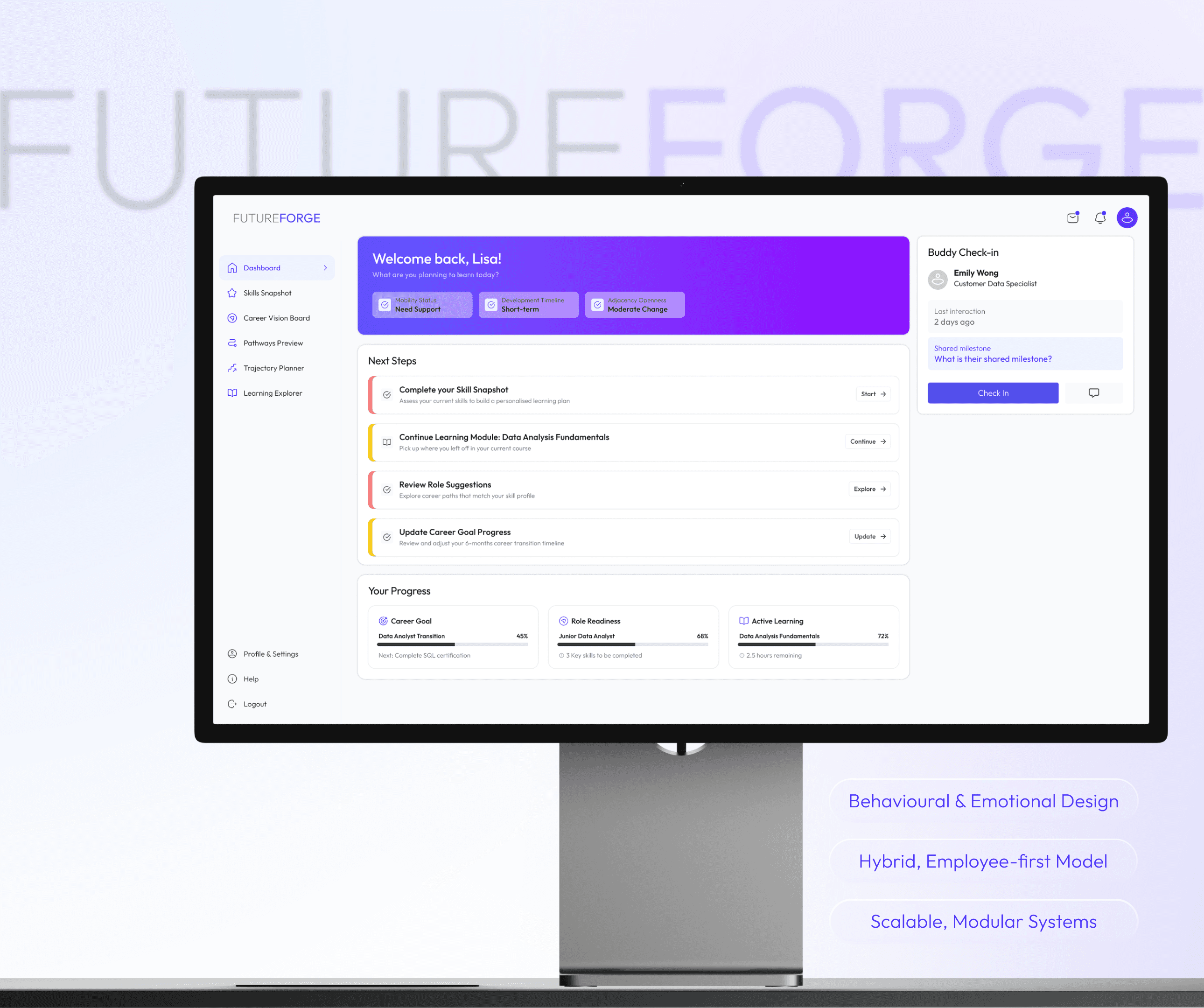
This project investigates why internal mobility often fails, even when reskilling and redeployment programmes already exist. By focusing on employees navigating role transitions and HR teams managing workforce change, we identified 4 systemic failure points in current transition models: technical fragmentation, risk-averse culture, emotional disengagement, and weak strategic coordination. In response, we developed FutureForge, an MVP service concept focused on role exploration, peer signals, and decision support instead of reskilling content.
The project was developed as a strategic MVP concept, and its behavioural logic, service direction, and organisational relevance were tested through paper prototyping, feedback, and co-creation workshops with sector experts. These activities built an evidence base for a more proactive internal mobility model and clarified the potential value of such a service for both employees and banks.
Problem Framing
The scale of disruption was observable at the sector level, but the pathway through transition remained unclear at the employee level.
01
Macro Level
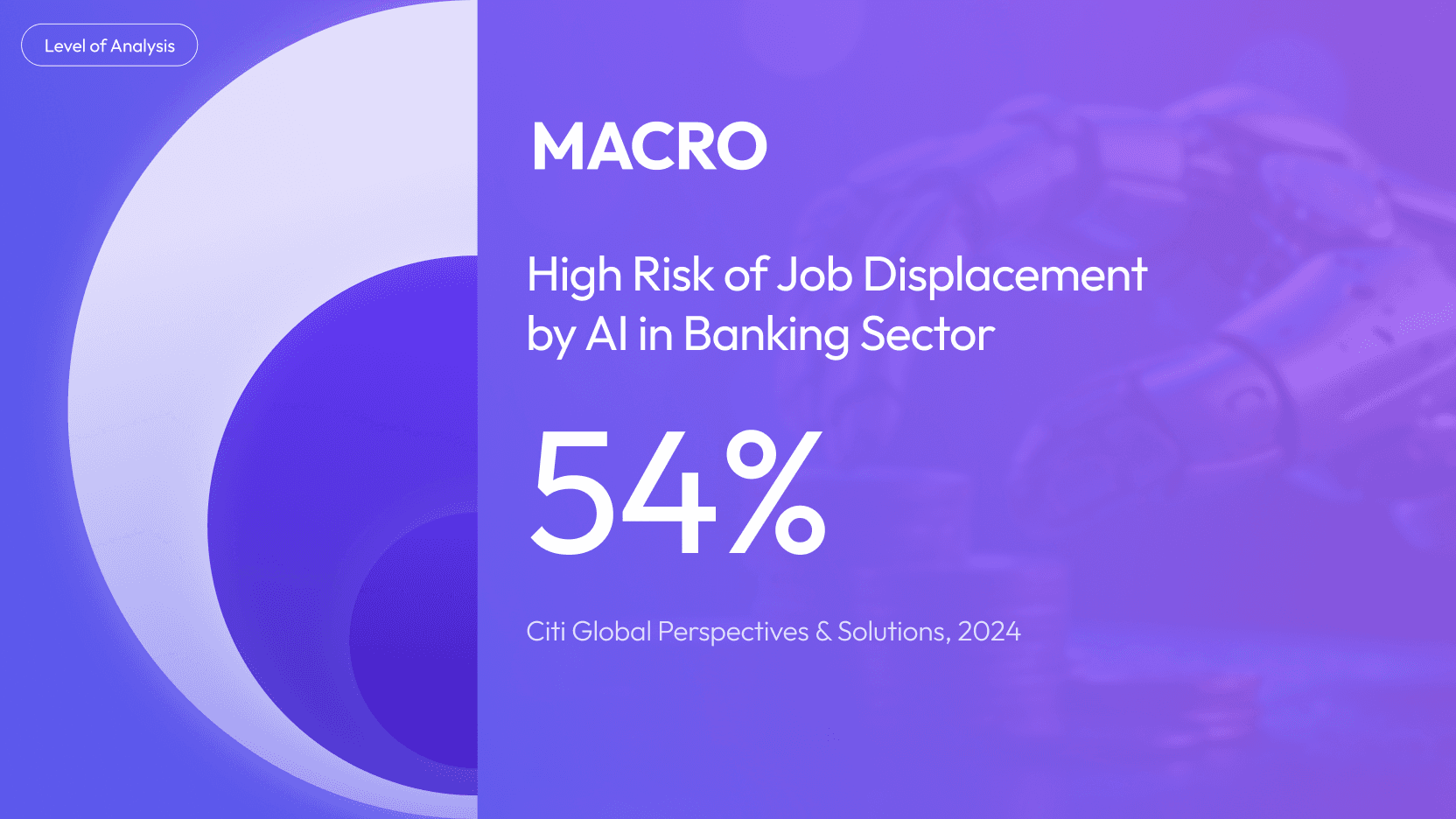
Secondary research confirmed the scale of the problem: 54% of UK retail banking roles are at high risk of AI-driven displacement.
02
Micro Scope
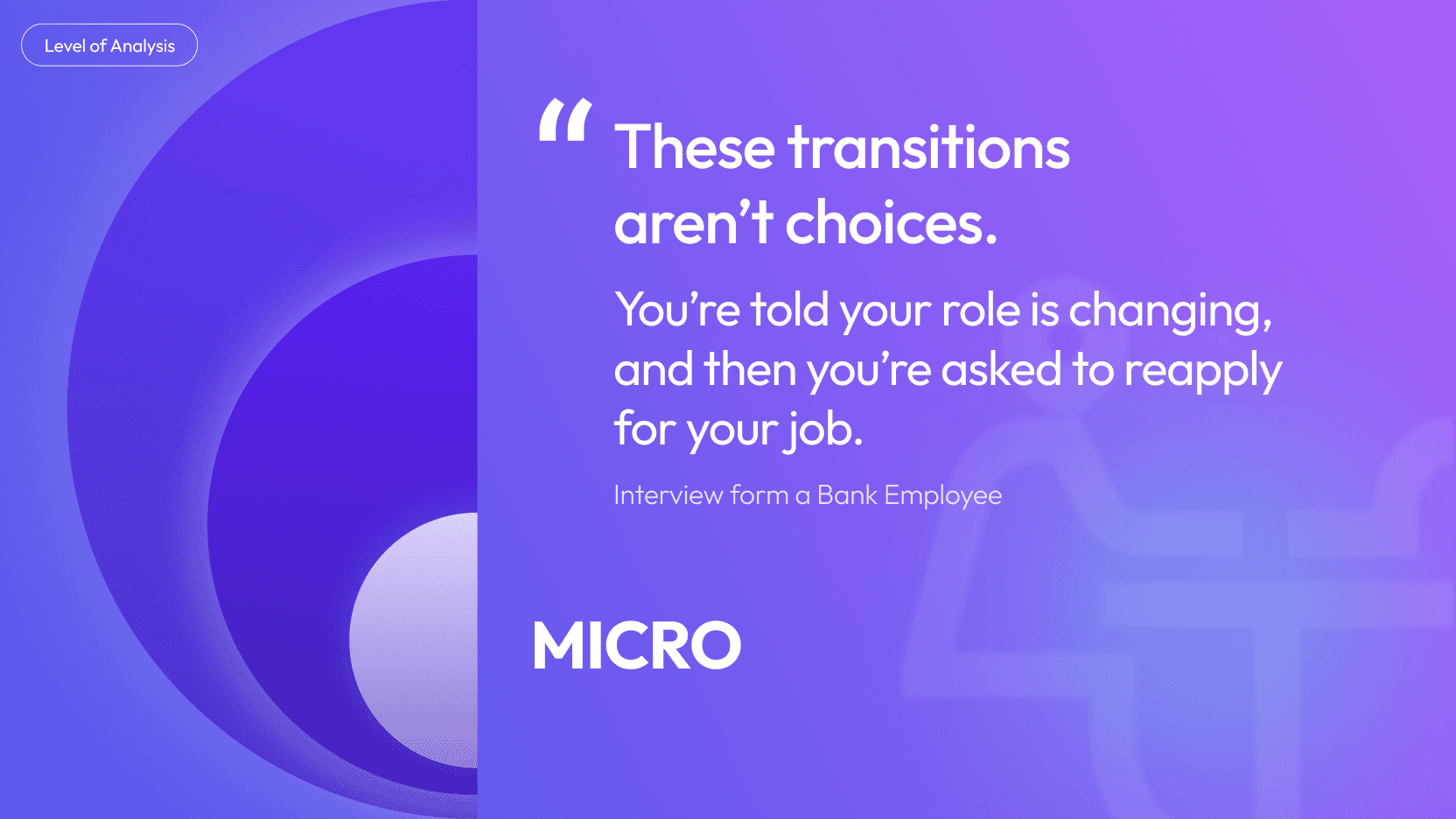
Primary interviews showed how that disruption played out for individuals; employees were asked to reapply for their own roles.
Problem Definition
The problem was not just a lack of reskilling, but a system that made transition difficult to understand and act on.
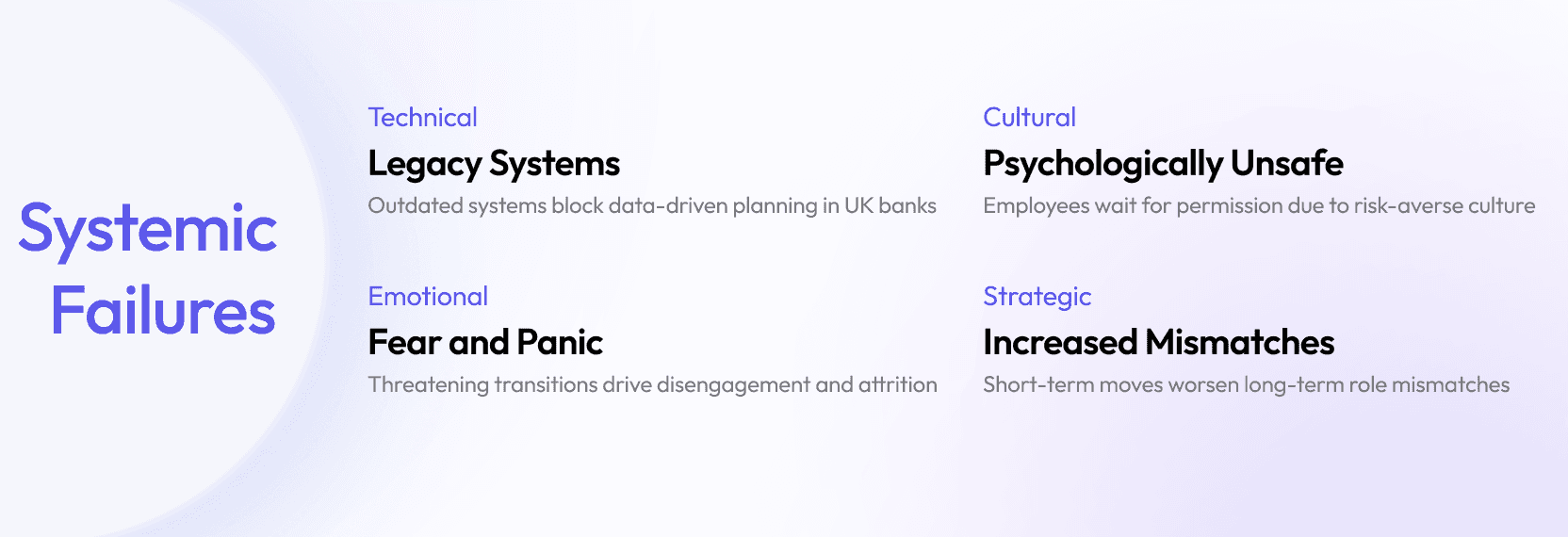
Defined 4 recurring barriers through thematic analysis of interviews with banking employees and HR professionals.
Design Implications
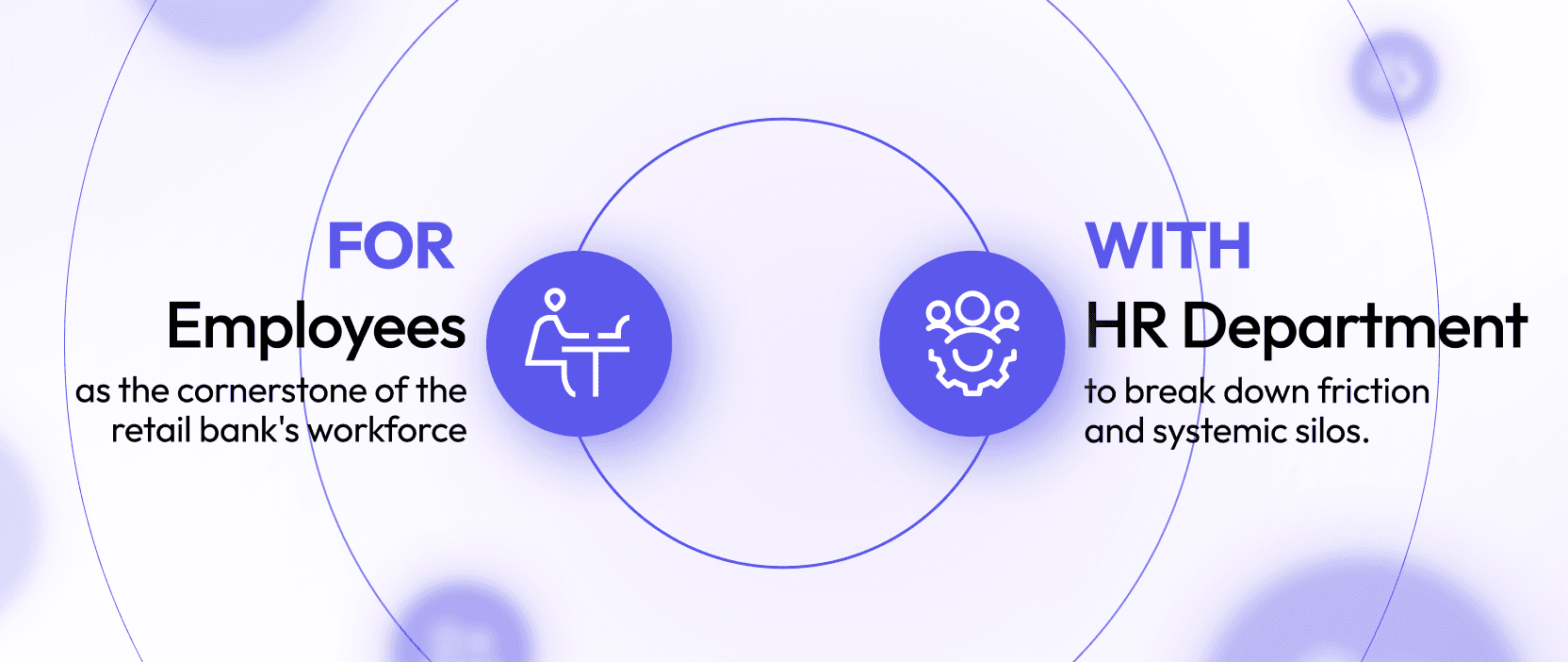
The service needs to increase employee agency while working with HR to reduce systemic friction.
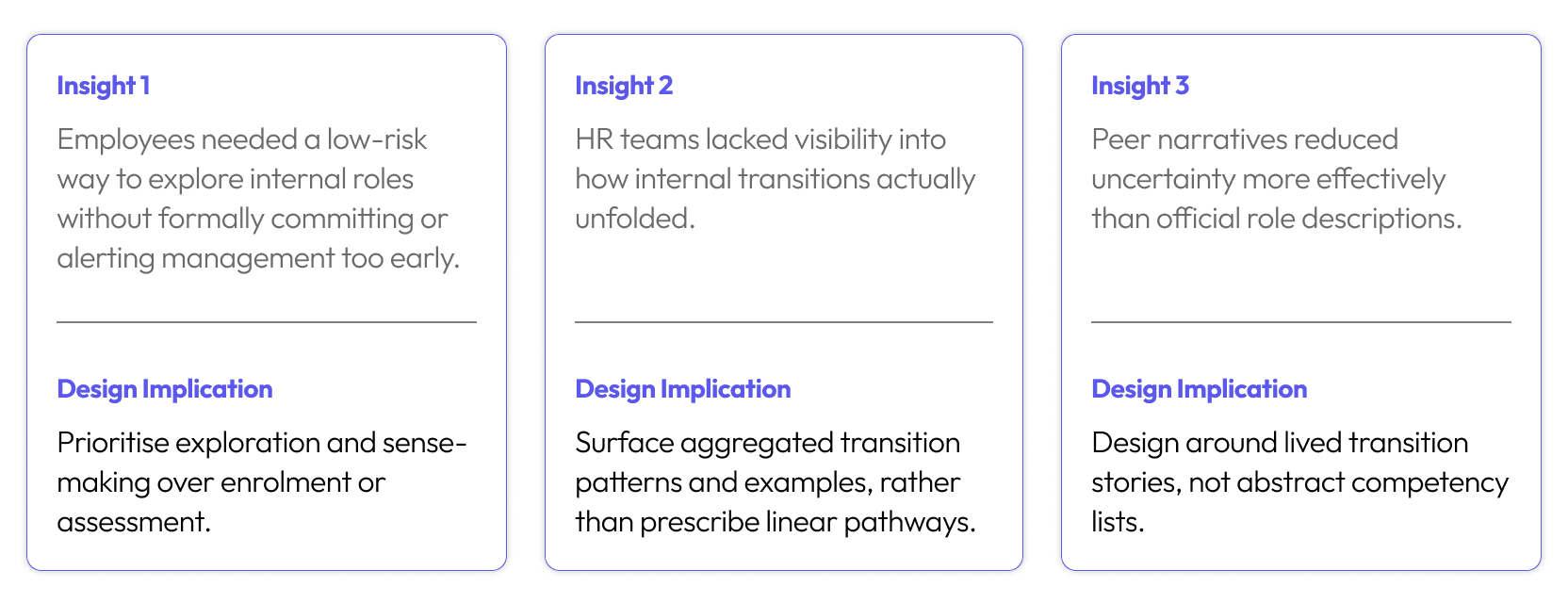
System mapping and multi-actor journey analysis showed that transition breakdowns were not confined to employees alone. HR, managers, and employees moved through the same change process with different expectations, fragmented support, and misaligned timelines. This made it clear that redesigning the transition as an employee-only experience would not be enough.
This led to a dual design principle: for employees, to make the transition more navigable, build confidence, and foster agency; and with HR, to reduce systemic friction and create the operational conditions for internal mobility to work in practice. These principles anchored the project in both human need and service viability.
Service Direction
From Reactive to Proactive Transitions
The core shift was to move support earlier, before disruption forced employees into reactive decisions.
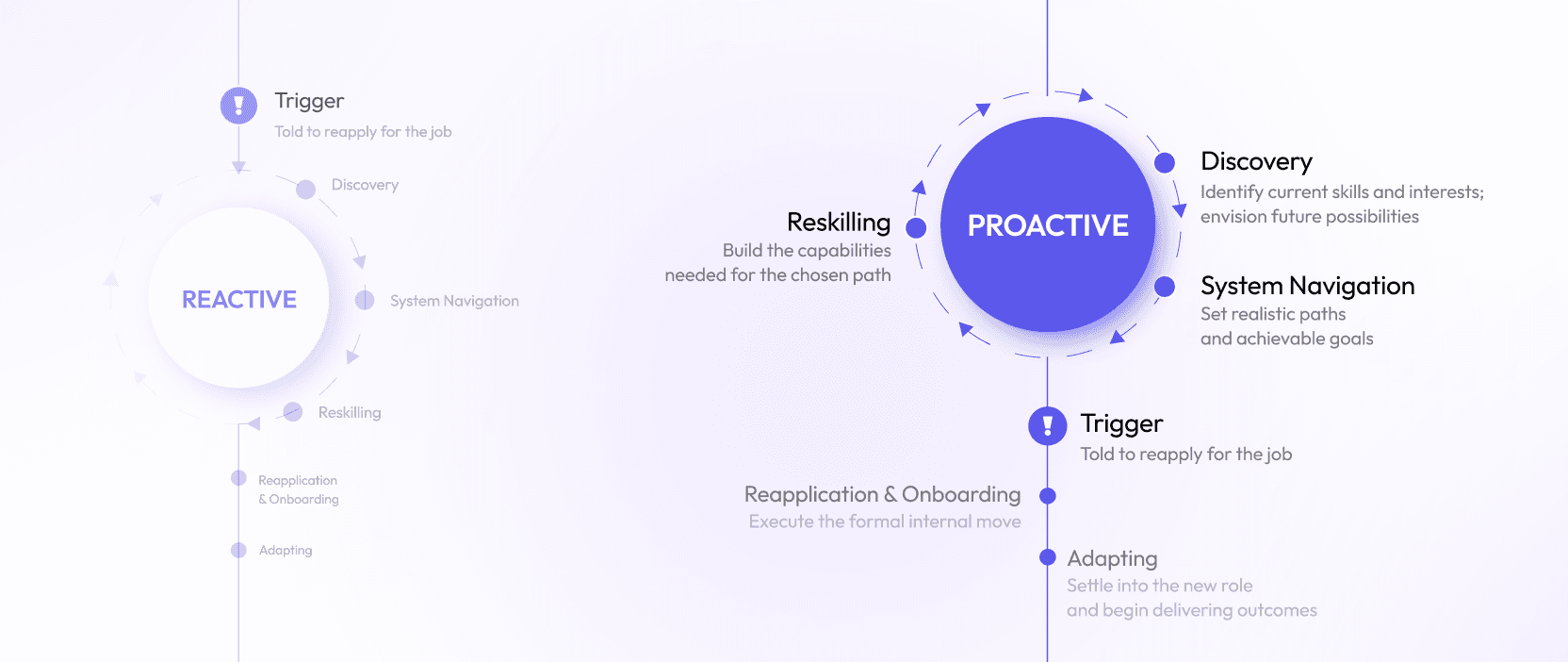
Mapping the as-is and to-be journeys showed that support in the current model began too late, often only after a disruption had occurred. Employees were expected to act once roles changed, rather than being prepared beforehand.
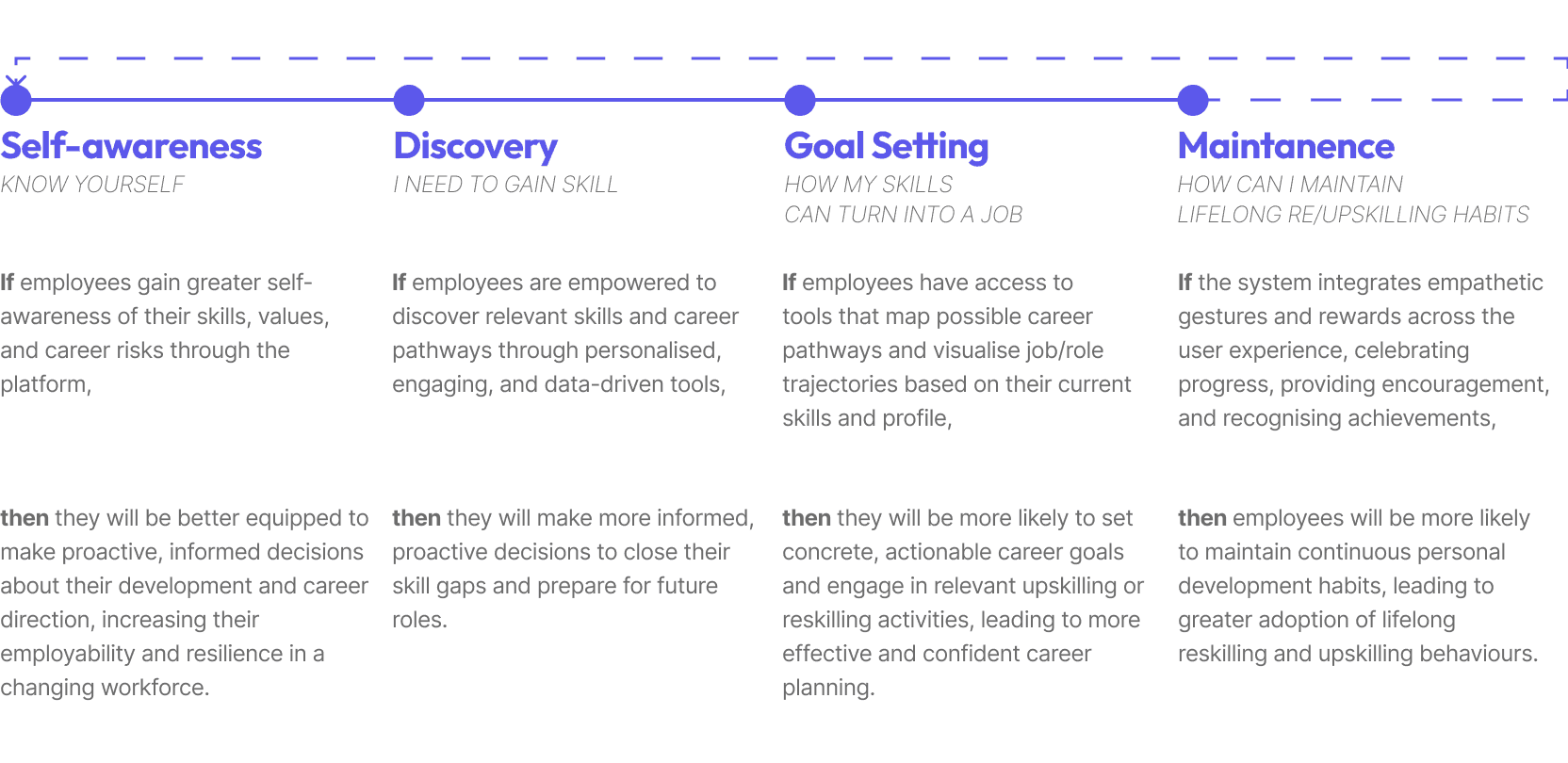
To address this, I reframed the journey around a proactive transition model supported by a behavioural mechanism: self-awareness, discovery, goal-setting, and continuous development. This shifted the service from helping people cope with change after the trigger to helping them recognise options, build readiness, and navigate transition earlier.
What We Chose to Test
The first priority to test was whether clearer role visibility and decision support could influence behaviour earlier.
Once the transition model was defined, we narrowed the prototype to the most critical points for early employee action. Analysis showed that employees were not blocked first by a lack of learning content, but by uncertainty around realistic next roles, readiness, and decision-making.
We prioritised role exploration, peer signals, and decision support as the first elements to test, while leaving broader reskilling content out of scope. This turned the prototype into a focused way to examine whether the service could make the internal transition feel clearer, more navigable, and worth engaging with.
“If employees could better understand their current readiness and adjacent options, then they would be more likely to engage proactively in internal transitions. “
Prototyping & Validation
1. Prototype Testing (Simulation workshop)
Clearer guidance made the transition feel more actionable, but credibility still depended on decision-quality information.
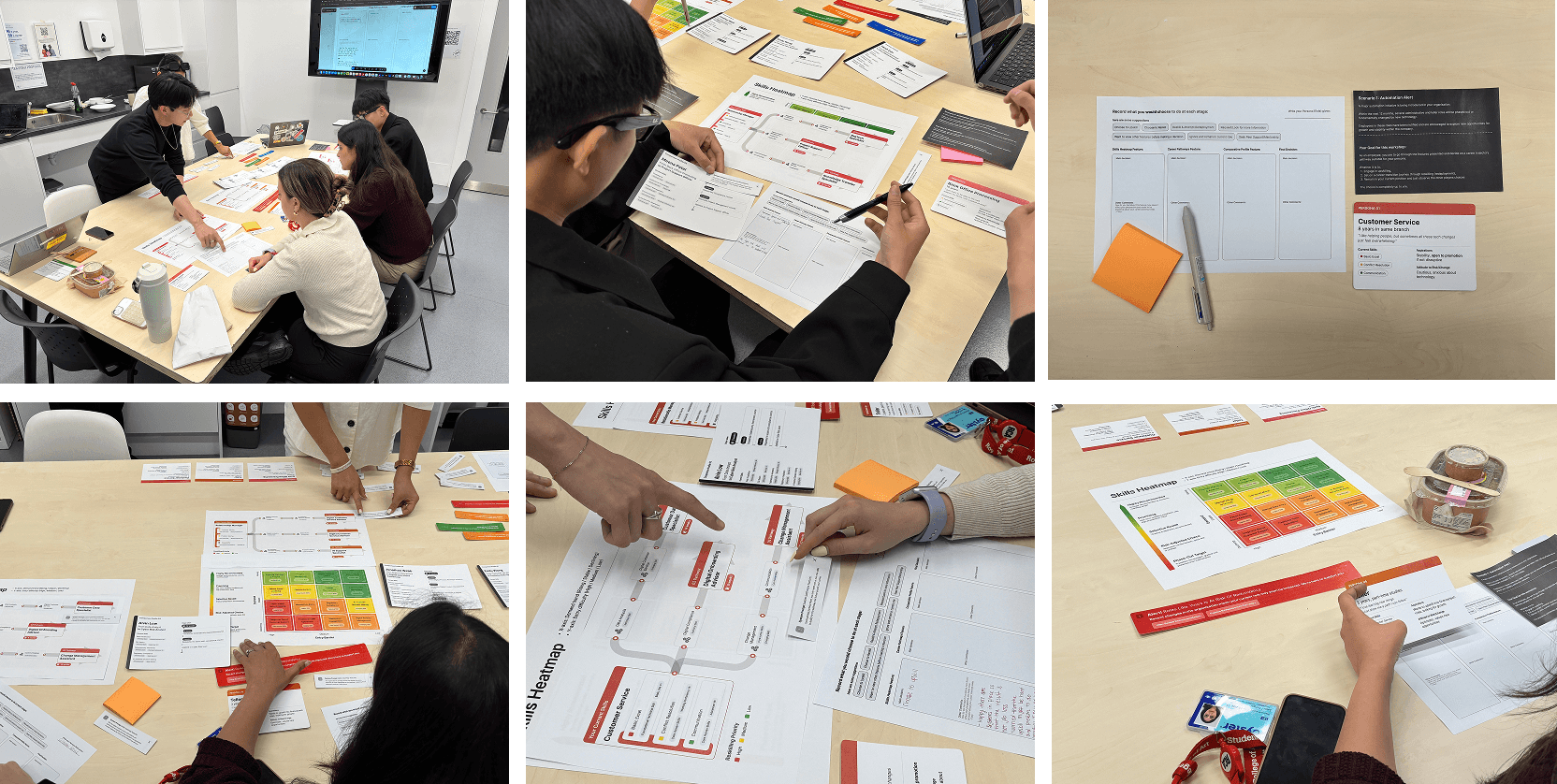
To test the first version of the service, we conducted a simulation workshop using paper-based prototypes and role-based scenarios of workforce transition. The prototype focused on self-awareness and discovery features, including empathetic nudges, a skills-demand heatmap, comparison profiles, and career-pathway routes.
The session showed that personalised prompts and visual tools helped participants make sense of future options and lowered some of the uncertainty around action. At the same time, the test exposed three design gaps: the flow needed clearer guidance, practical decision-making information was missing, and personalisation had to be grounded more directly in individual profile context.
2. Co-creation & Validation
Expert validation strengthened the case that mobility works better when guidance is tied to real opportunities and operational conditions.
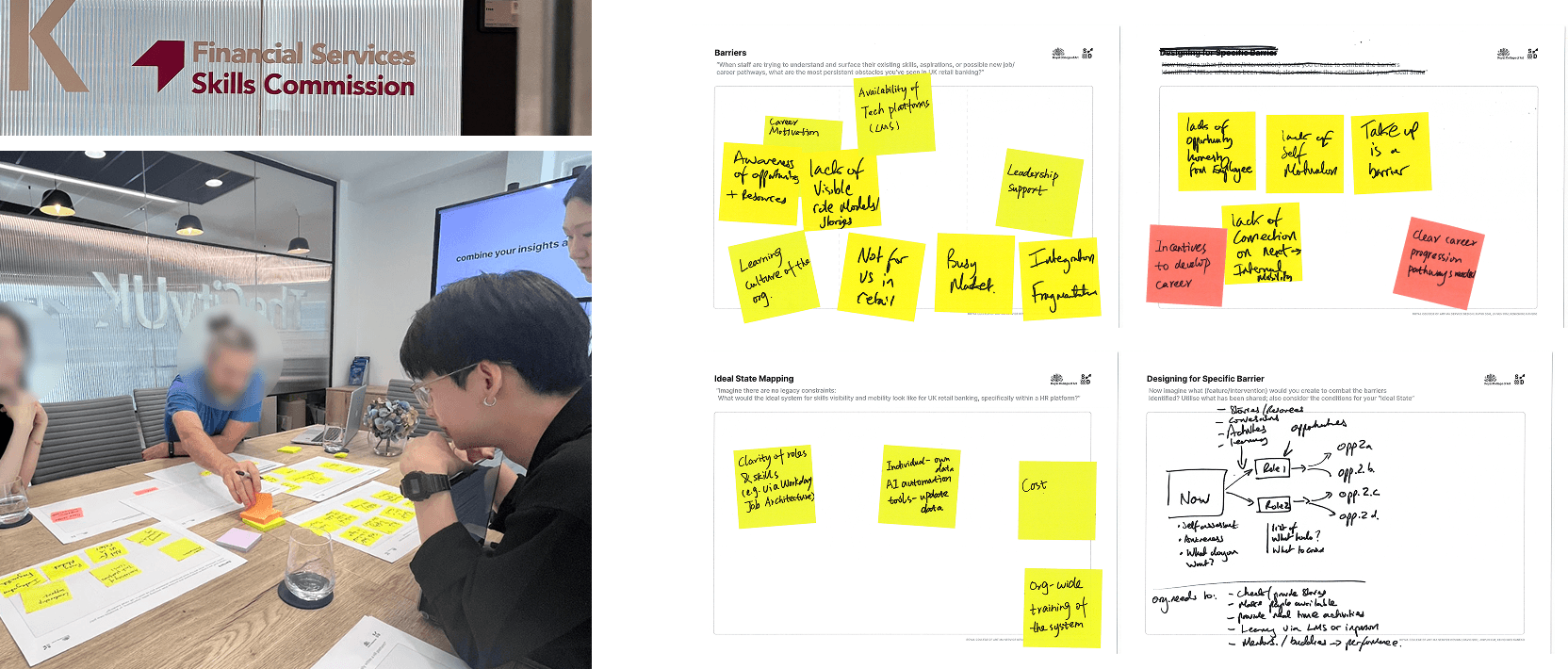
In a second workshop with the Financial Services Skills Commission (FSSC), we focused on validating whether the service model was both desirable and viable for real banking contexts. This session first surfaced key barriers to mobility—fragmented systems, low psychological safety, and unclear ownership—before testing the core service concepts against these constraints.
Feedback from the workshop reinforced a central hypothesis: employees respond better to guidance than mandates, and the transition feels more achievable when tools offer clear, data-informed options tied to real opportunities. In addition, the workshop clarified adoption conditions—such as trust, usability, and integration with existing systems—which shaped the next iteration of the concept, extending impact beyond interface refinement alone.
Proposed Intervention
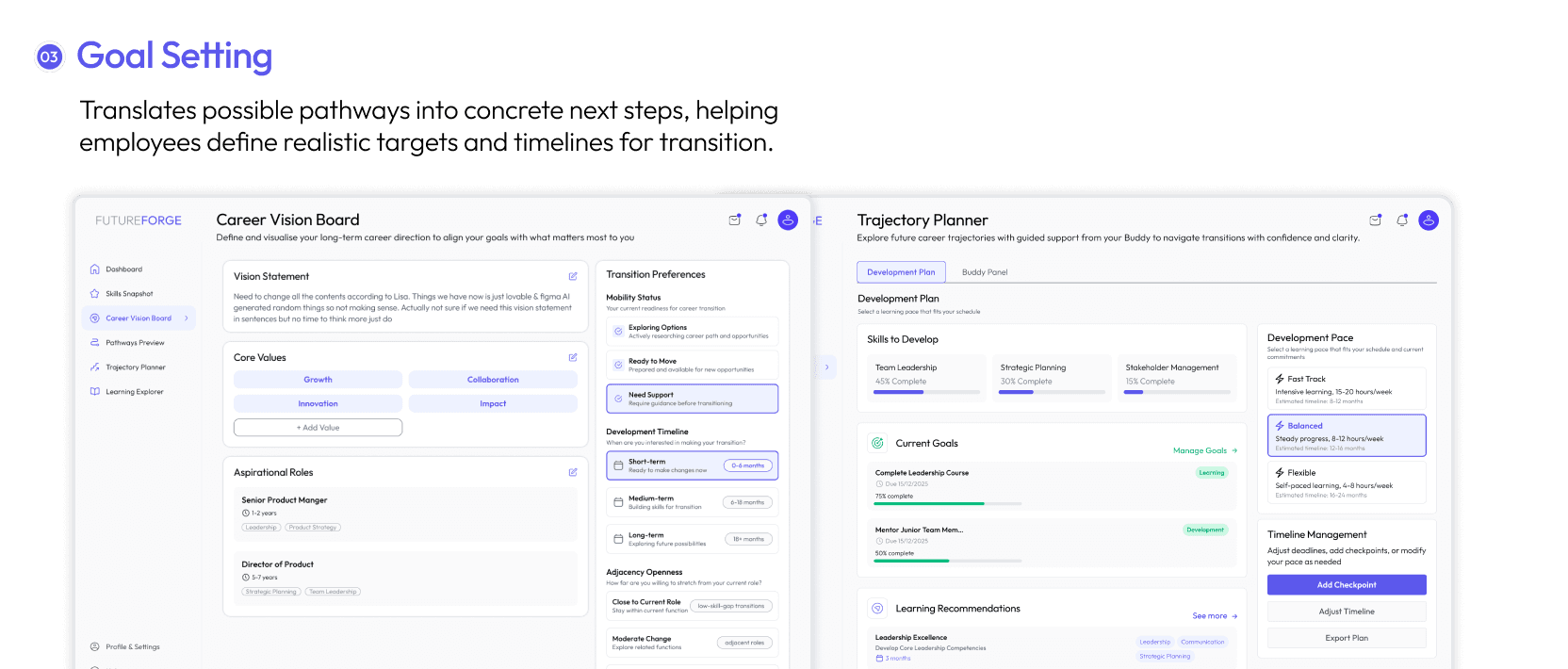
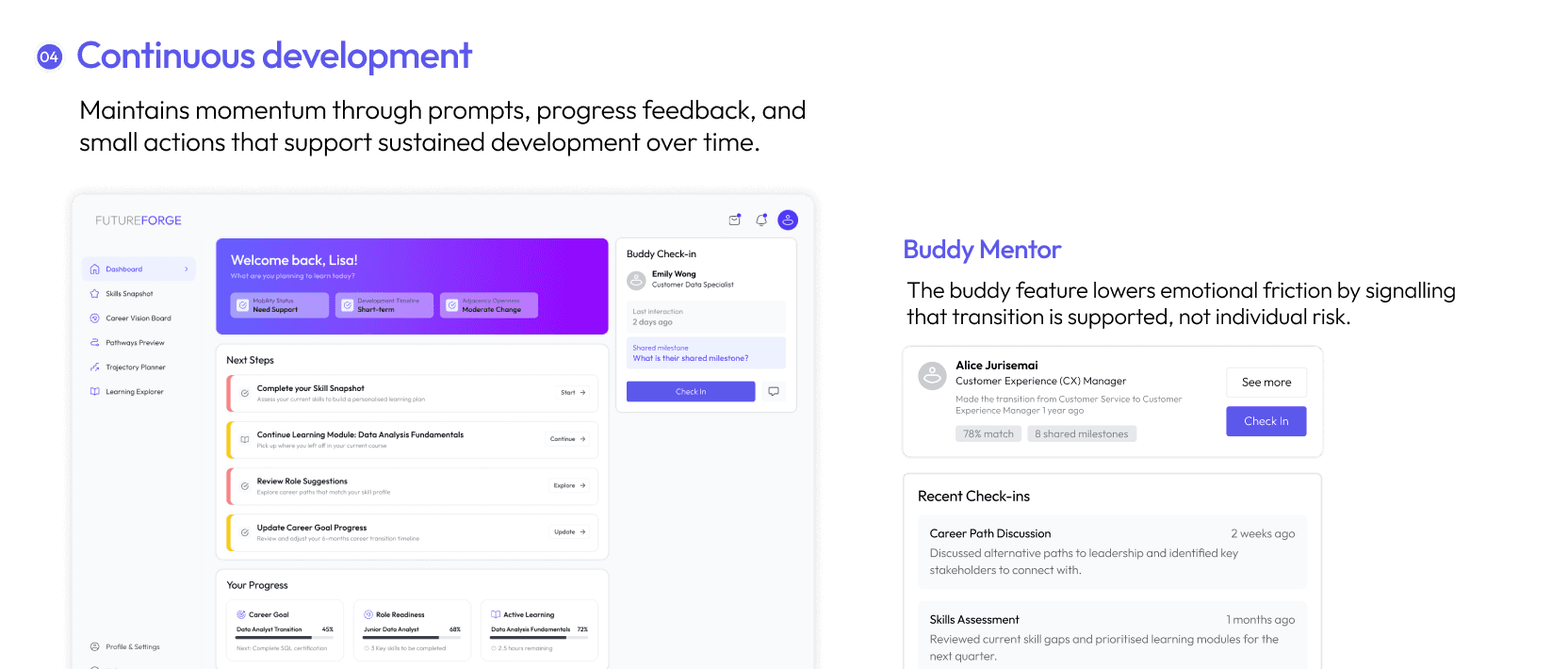
FutureForge translates workforce transition into a structured behavioural flow.
FutureForge is a lightweight internal mobility platform that supports early-stage role exploration for employees while providing HR team
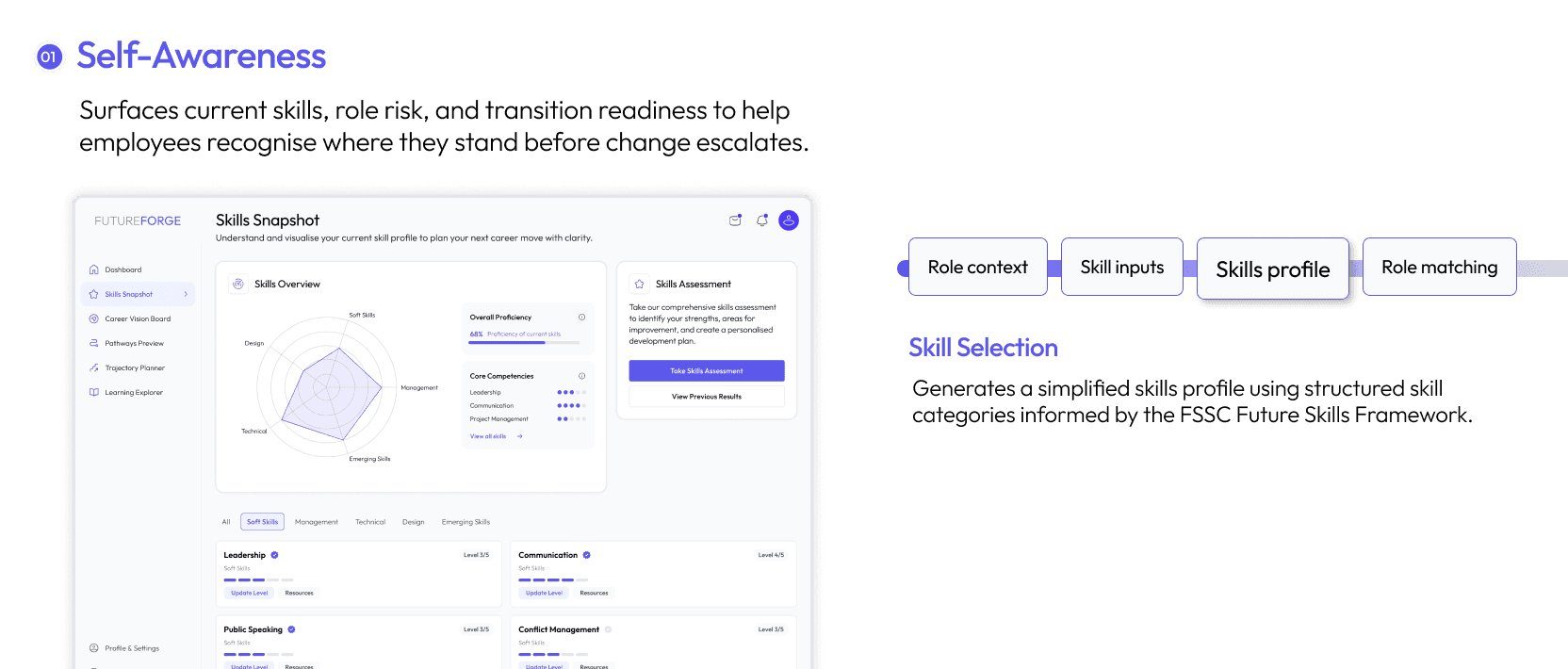
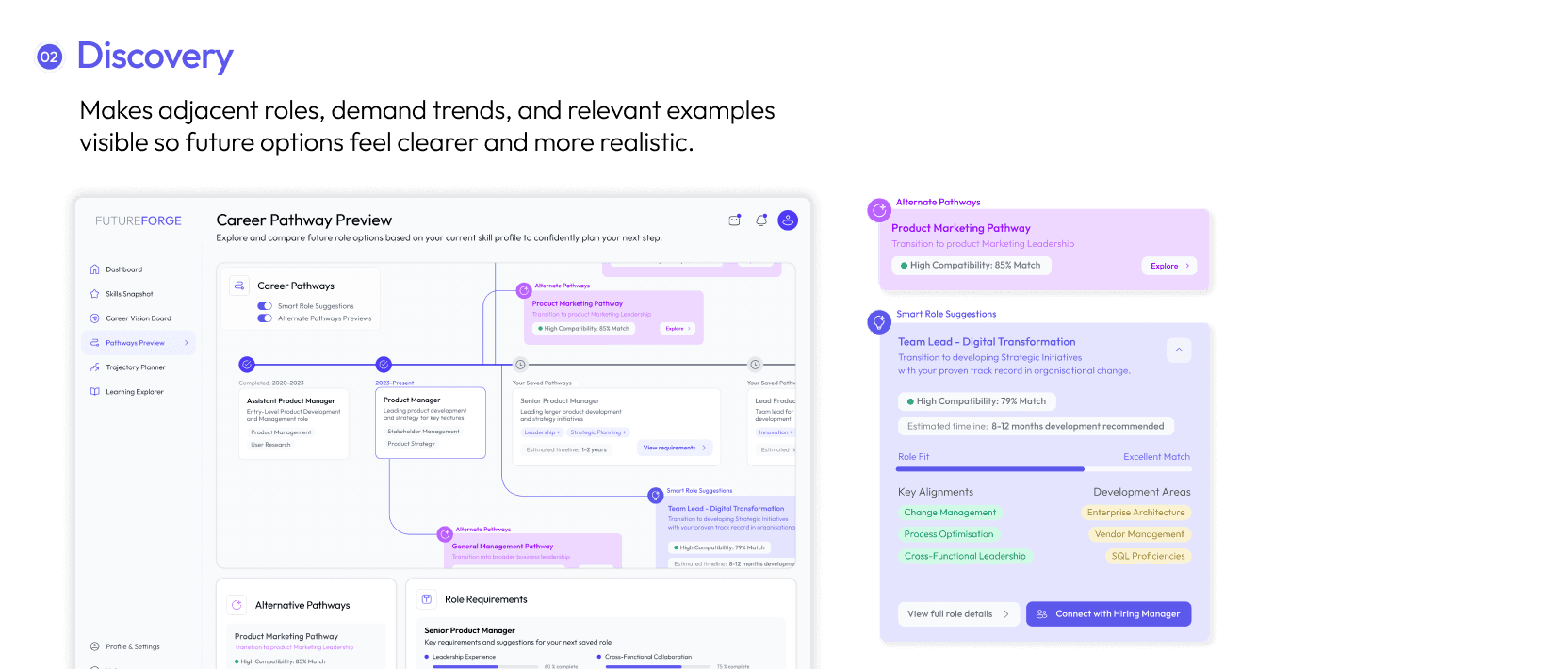
s with aggregated insight into transition patterns across the organisation. The concept is designed not as a collection of isolated features, but as a four-stage flow that supports proactive transition: self-awareness, discovery, goal-setting, and continuous development. These stages help employees understand their current skills and risks, explore relevant pathways, define realistic next steps, and stay engaged through small prompts and ongoing feedback. This structure allows the service to support both individual action and organisational visibility.
The concept was intentionally structured to respond to the four failure types identified earlier: integrating fragmented signals, increasing employee agency, reducing emotional friction, and aligning individual pathways with workforce planning.
Projected Impact
By turning fragmented transitions into clearer and earlier pathways, the concept creates value for employees, HR teams, and long-term workforce planning.
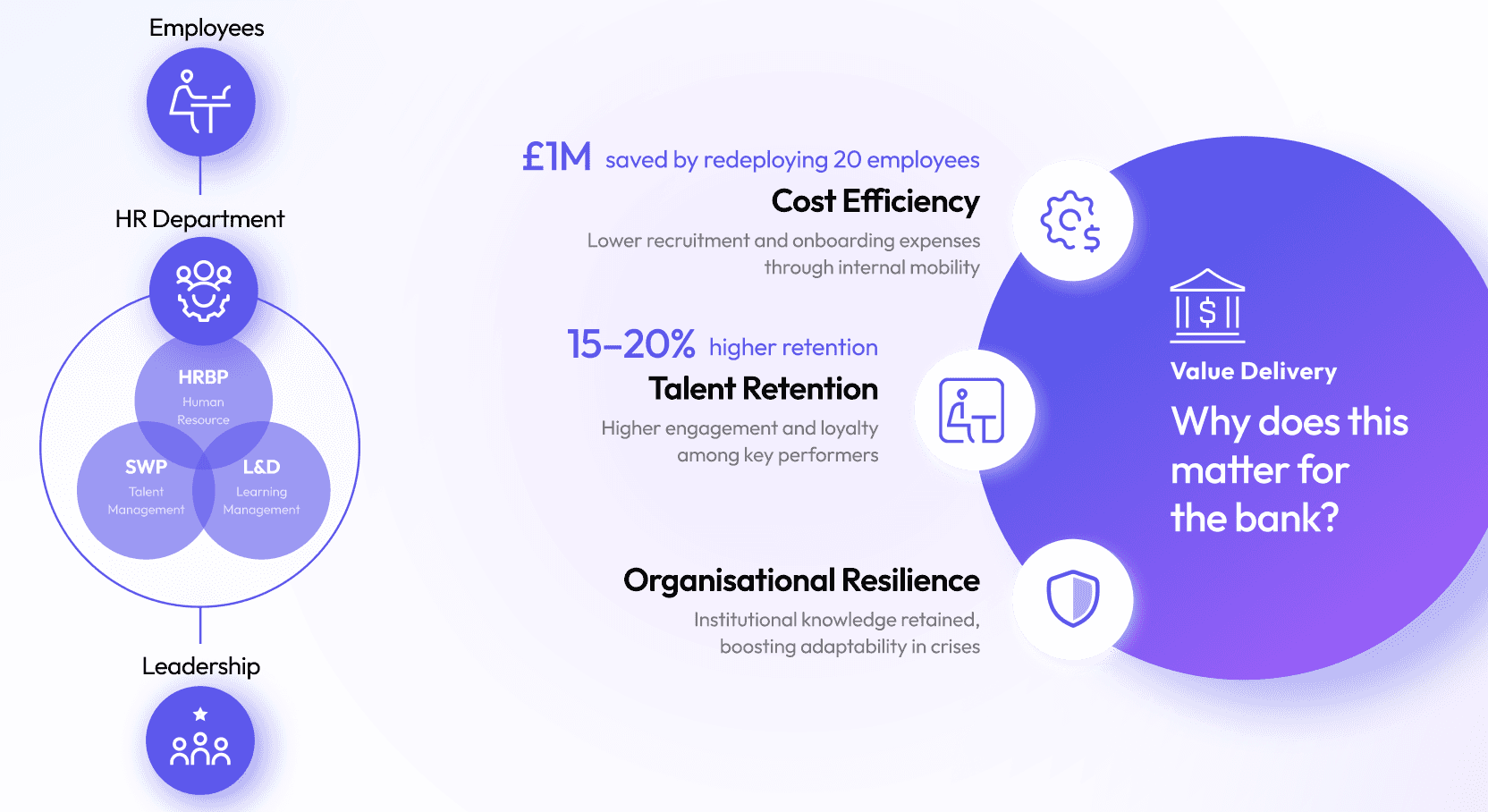
FutureForge is designed to create value at both the employee and organisational levels. For employees, it supports earlier role visibility, greater confidence, and more actionable transition decisions. For HR and L&D teams, it provides clearer signals about workforce readiness, capability gaps, and emerging demand for transitions.
Over time, this could reduce avoidable hiring and onboarding costs, improve retention of internal talent, and strengthen organisational resilience by retaining institutional knowledge during change. More strategically, the concept reframes internal mobility from a reactive redeployment process into a proactive workforce capability model aligned with future role evolution.
What this project reframed
This project showed that workforce transition is not only a reskilling issue, but a service design problem shaped by timing, trust, and employee agency.
Even where learning provision exists, employees struggle to act when pathways are unclear, and support arrives too late. The most important shift in my thinking was to frame transition as a coordinated service rather than a standalone training offer.
At the same time, the project exposed a practical limitation: while the concept was validated through prototyping and expert feedback, organisational readiness was not tested in a live setting.
In a real deployment context, the next step would be a contained pilot focused on adoption conditions, particularly integration, ownership, and whether employees engage with the service early enough for it to change behaviour.