Futures Thinking
Scenario Building
Strategic Design
Reimagining Youth Rehabilitation
Envisioning how future rehabilitation systems could support young offenders beyond the limits of today’s structures.
• Conducted signal scanning and synthesis to identify forces shaping youth justice towards 2040
• Translated emerging risks into future scenarios, personas and speculative artefacts
• Used Theory of Change and backcasting to connect a preferred future to interventions
and policy shifts today
PARTNERSHIP WITH
UK Ministry of Justice
DURATION
2024
ROLE
Service Designer
DESIGNED AT
Royal College of Art

Project Overview
Reimagining youth rehabilitation through ethical AI, stability support, and system change.
Partnering with the Ministry of Justice, this project explores the future of youth rehabilitation by 2040, considering the impacts of digital surveillance, social isolation, and institutional strain on youth vulnerability. By applying foresight methods and mapping stakeholder systems, I identified structural gaps and resilient intervention points. The proposed early-intervention model combines stability support, ethical AI reflection tools, and community reintegration strategies. This work guides policy readiness, strengthens cross-agency collaboration, and outlines a future service ecosystem designed to reduce reoffending rates.
Challenges
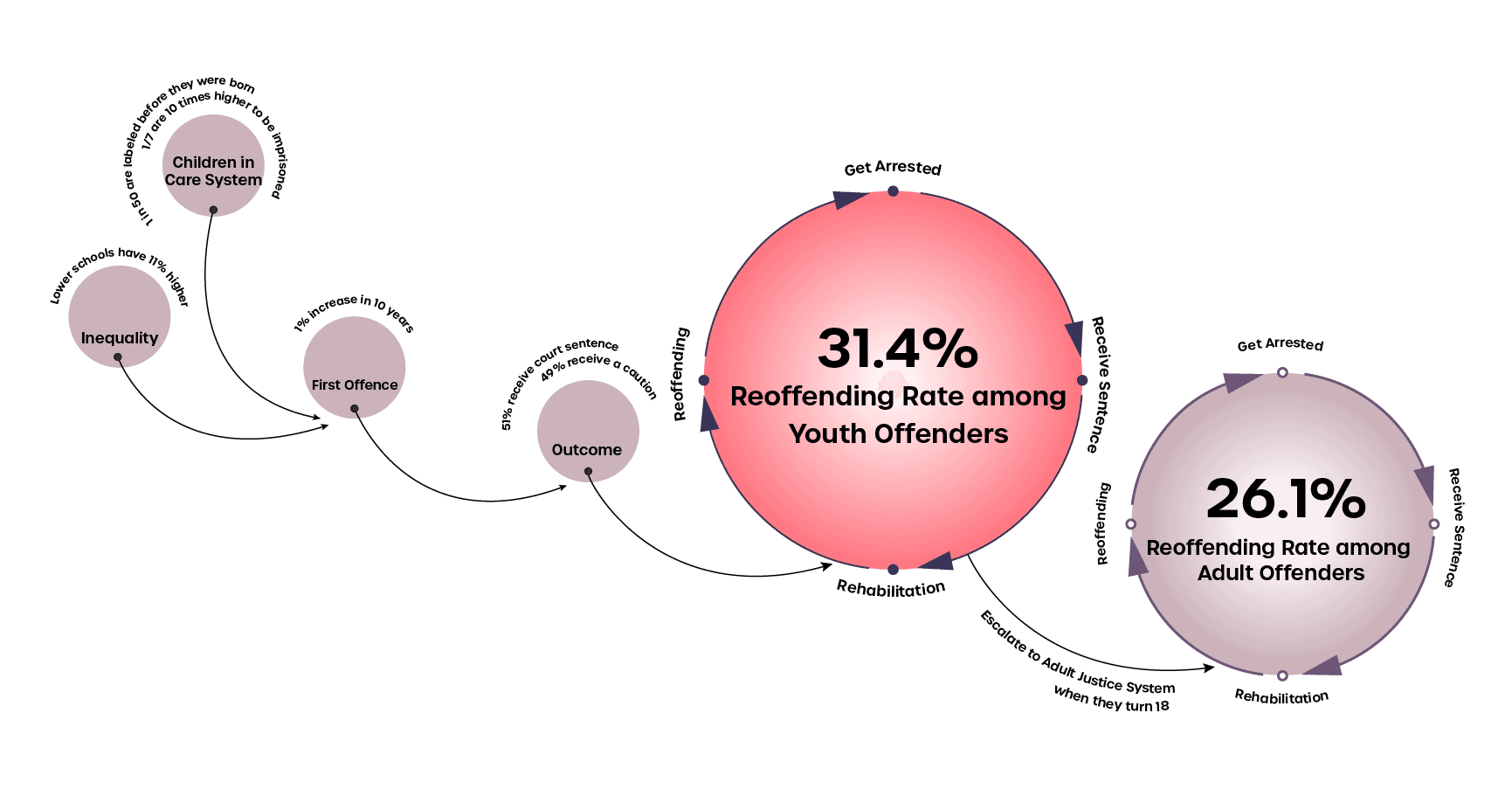
Youth offending in the UK reflects a failure of early intervention, with most people imprisoned by 24 first offending before 16.
(Youth Justice Board & Ministry of Justice, 2024)
01
Late intervention leading to reoffending
Structural inequality and late intervention in youth justice frequently keep young people reoffending instead of rehabilitating.
02
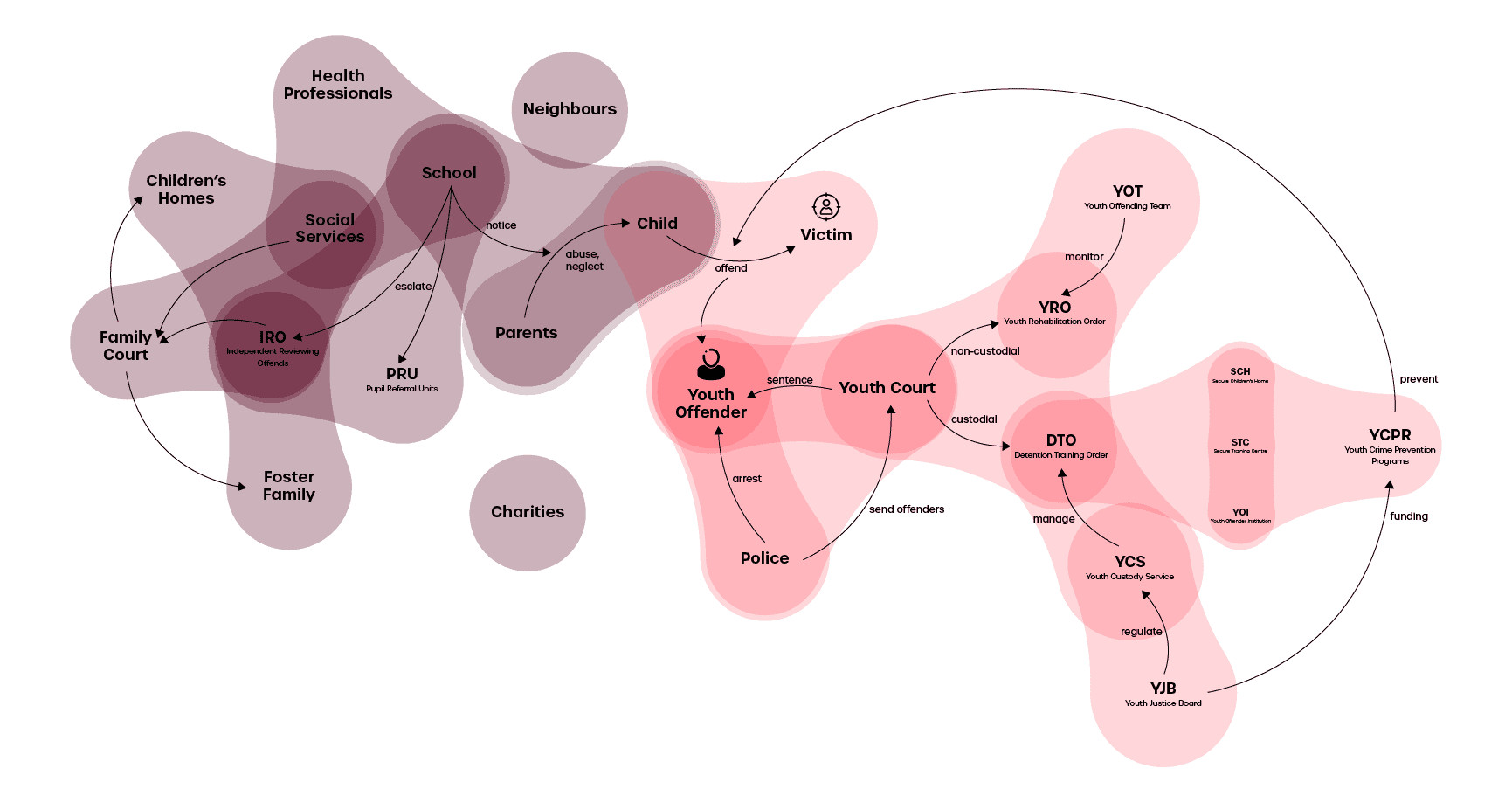
Fragmented services leave critical support gaps
A fragmented ecosystem where agencies operate in silos, causing duplication, unclear roles, and critical support gaps for youth.
Early offending is rarely an isolated behavioural issue. It more often signals unmet needs that have already gone unaddressed across care, education, family, and community support systems.
Most people imprisoned by 24 first offended before 16, indicating that risk accumulates well before adulthood.
At this stage, young people often need stability, trusted relationships, and coordinated support rather than delayed or fragmented responses.
When intervention comes late, the system becomes more likely to manage escalation than to prevent it.
Approach: Speculative Design
Projecting youth justice into 2040 showed that rehabilitation must shift from reactive correction to earlier and more personalised support.
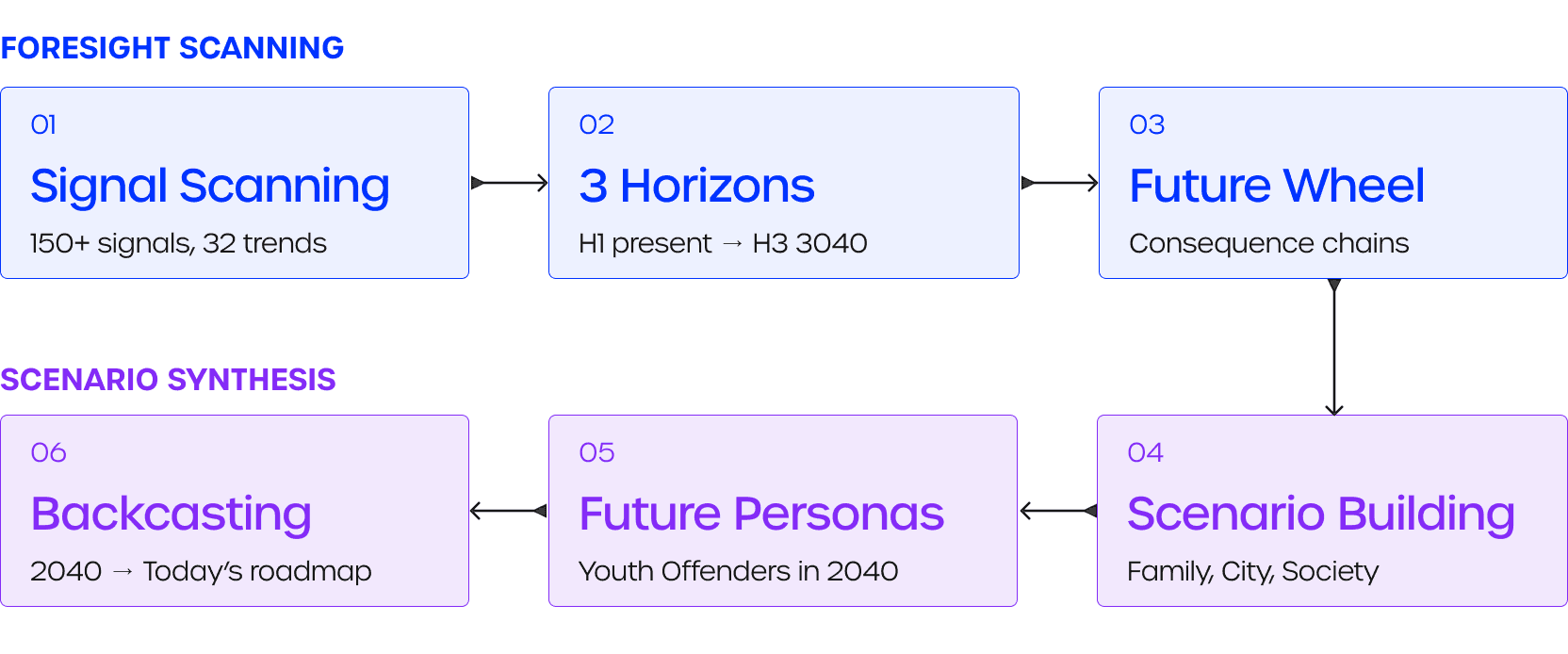
Building future scenarios made it clear that existing youth justice approaches would struggle in a more digitally mediated and socially fragmented context. Increased surveillance, persistent digital records, and declining trust suggested that reactive, post-offence rehabilitation would become less effective over time.
From this, we identified that the critical intervention point is not after repeated offending, but at the moment of first entry into the system. Rehabilitation would need to operate earlier, with a stronger focus on stability, trust-building, and personalised pathways rather than standardised correction.
This reframing directly informed the design of an intervention model that prioritises early, relational, and adaptive support, rather than relying on late-stage punitive responses.
We structured the work around four questions:
(01) How might future social and technological shifts reshape youth behaviour?
(02) How could these shifts change the needs and motivations of young offenders?
(03) Where are the early-intervention points that remain strategically valuable?
(04) And what kinds of service models could help the Ministry of Justice act earlier and more relationally?

How Might We
How might we prevent first-time entrants in 2040 to the youth justice system from reoffending by building trust and confidence in the digitalised, fragmented society?
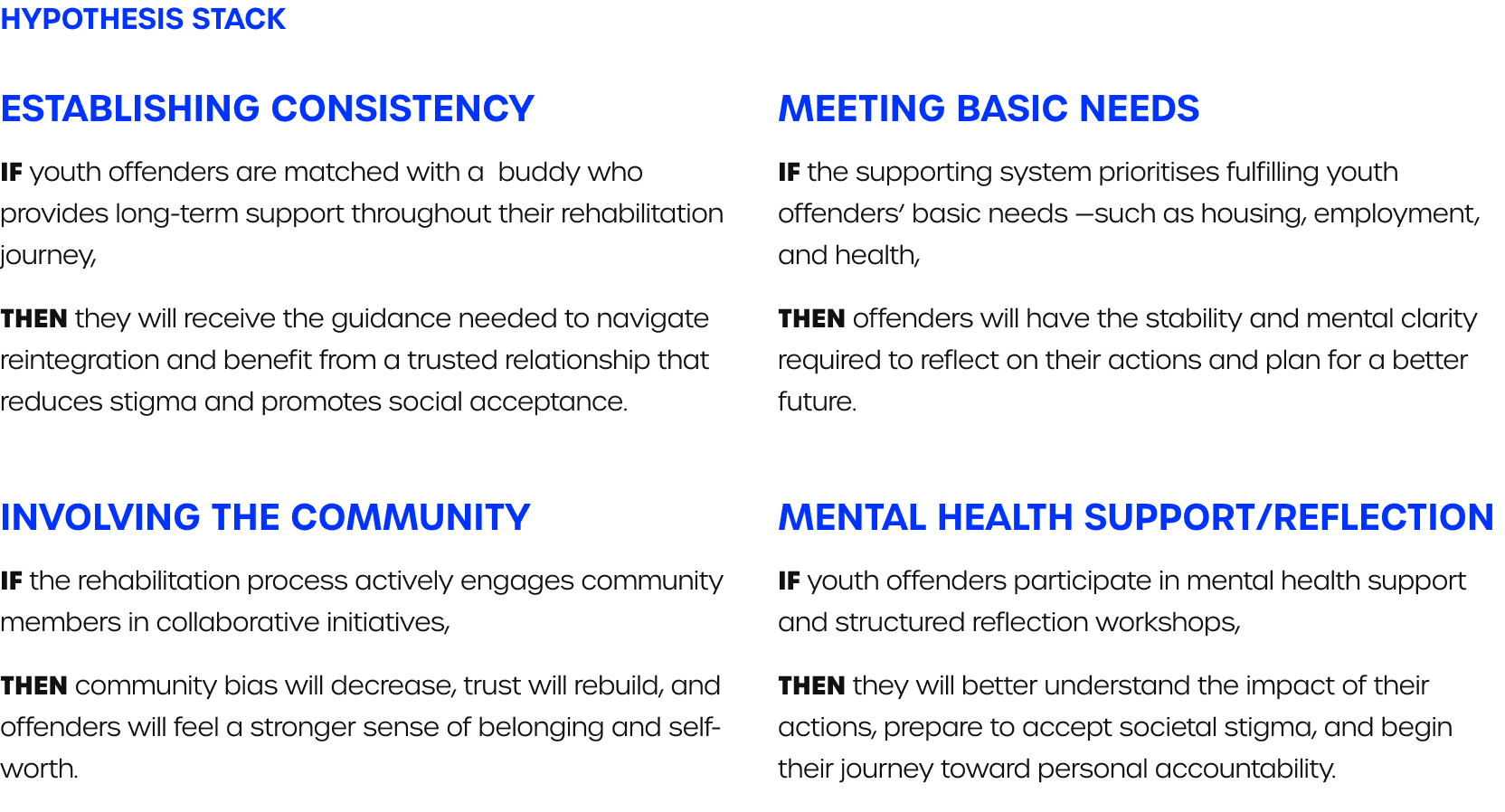
We built hypotheses focused on four key aspects of rehabilitation to come up with a service 'Turning Point'. It frames how consistent mentorship, basic needs fulfilment, community engagement, and mental health support collectively contribute to sustained behavioural and systemic transformation.
Proposed Intervention
The program follows a structured, intensive 1-3 month journey, designed to support youth offenders in rebuilding their lives through human connection, self-reflection, and real-world engagement.
By combining personalised support, human mentorship, and hands-on experience, this intensive program empowers youth offenders to break the cycle of crime and take control of their futures.
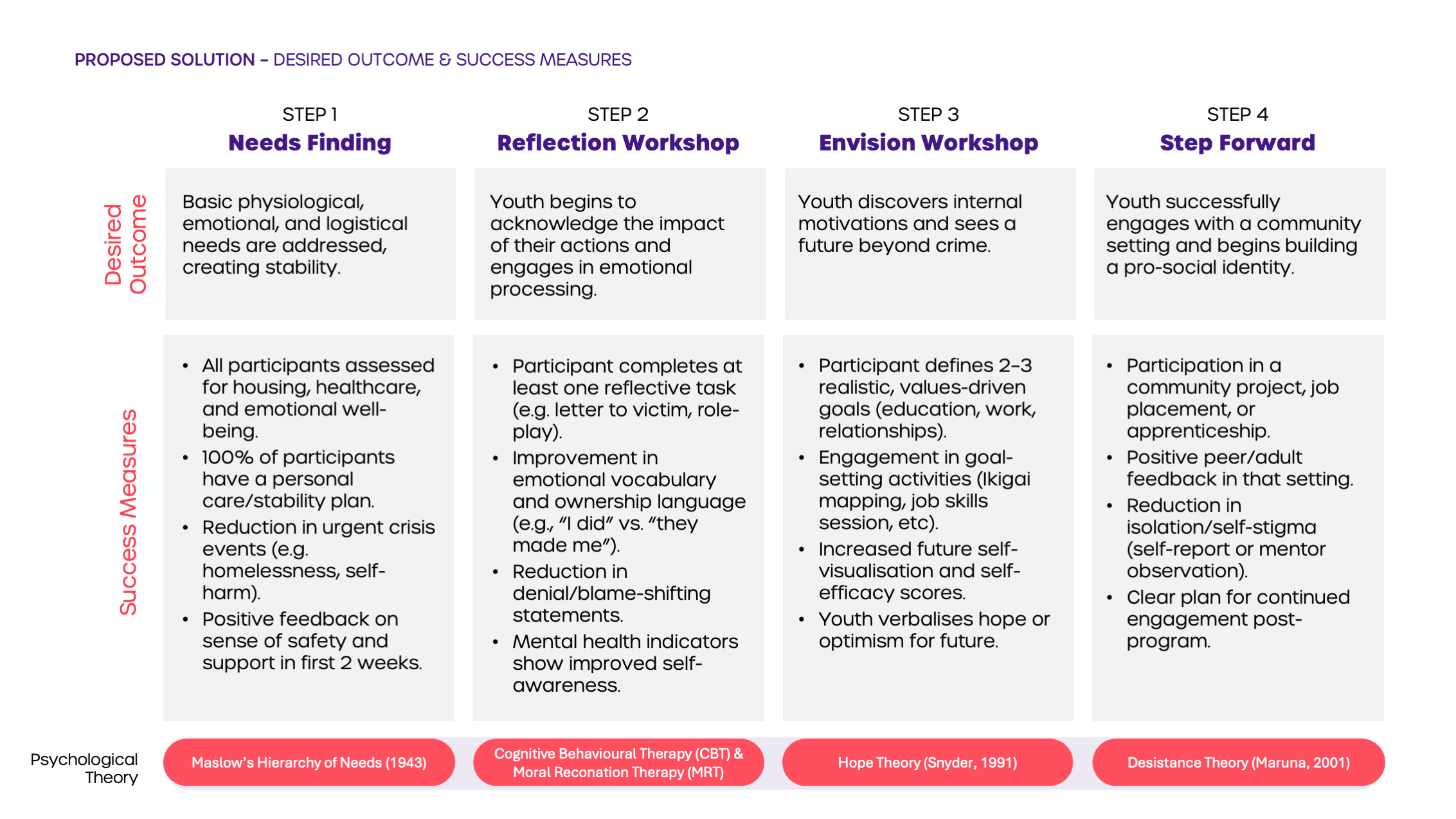
Stability & Support: The first step ensures that basic needs, such as housing, healthcare, and emotional well-being, are met. Each participant receives personalised support, laying the foundation for a stable future before deeper rehabilitation begins.
Reflection & Accountability: Through guided workshops and mental health support, participants reflect on their past actions, the impact of their crimes, and the harm caused to victims. This stage fosters self-awareness, accountability, and emotional growth.
Future Vision & Goal Setting: In envision workshops, participants explore career paths, develop life goals, and build skills that align with their aspirations. This helps them shift their focus from past mistakes to future potential.
Community Reintegration: Finally, participants apply their newly developed skills in real-world settings, engaging in community projects, apprenticeships, and work placements to rebuild trust and reintegrate into society.
Strategic Value
We developed a Theory of Change to illustrate the causal logic linking our interventions to intended outcomes and long-term impact.
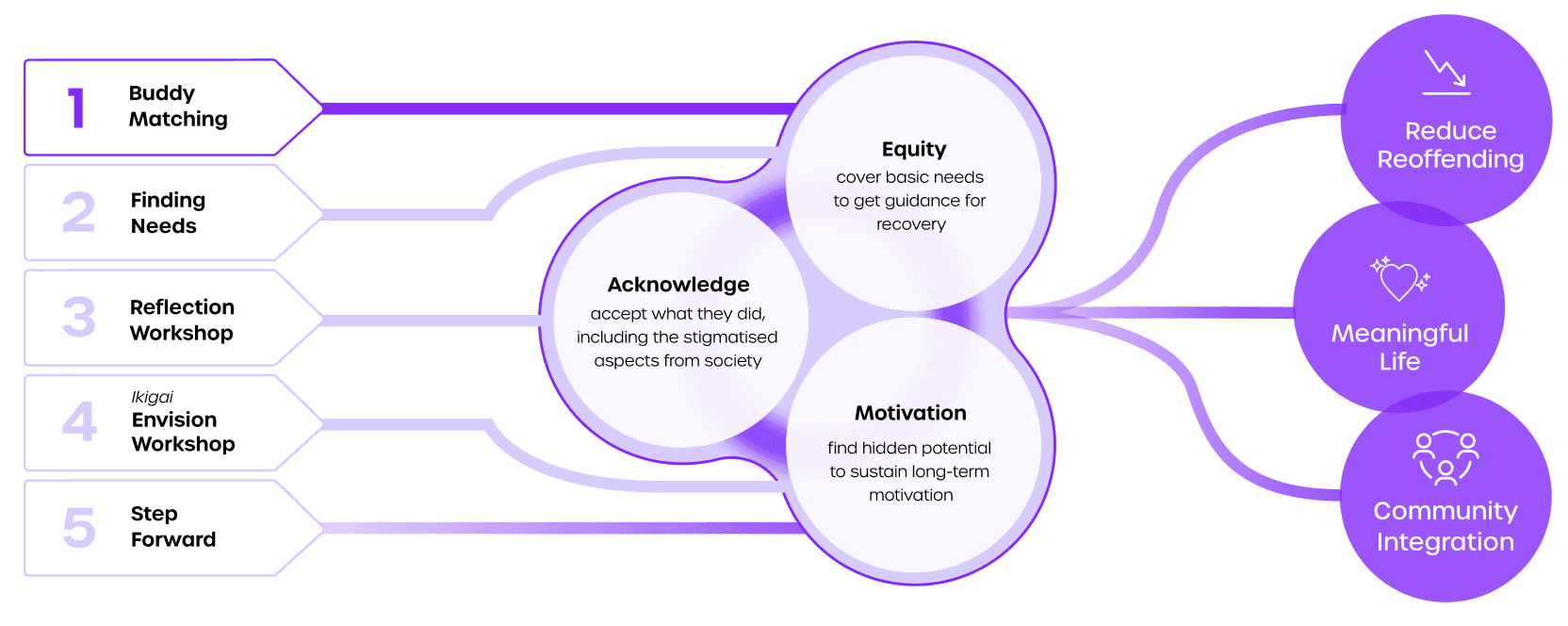
Since this project was speculative, the value was not in claiming live implementation, but in making future-facing policy questions concrete enough to evaluate.
The model visualises five key activities, ranging from buddy matching to future visioning, that aim to support youth offenders’ journey from marginalisation to reintegration. These interventions seek to foster equity by meeting basic needs, promoting personal accountability through reflection, and cultivating motivation for future planning. Together, these outcomes contribute to reduced reoffending risk, greater social integration, and a more meaningful life.
Ethical Considerations
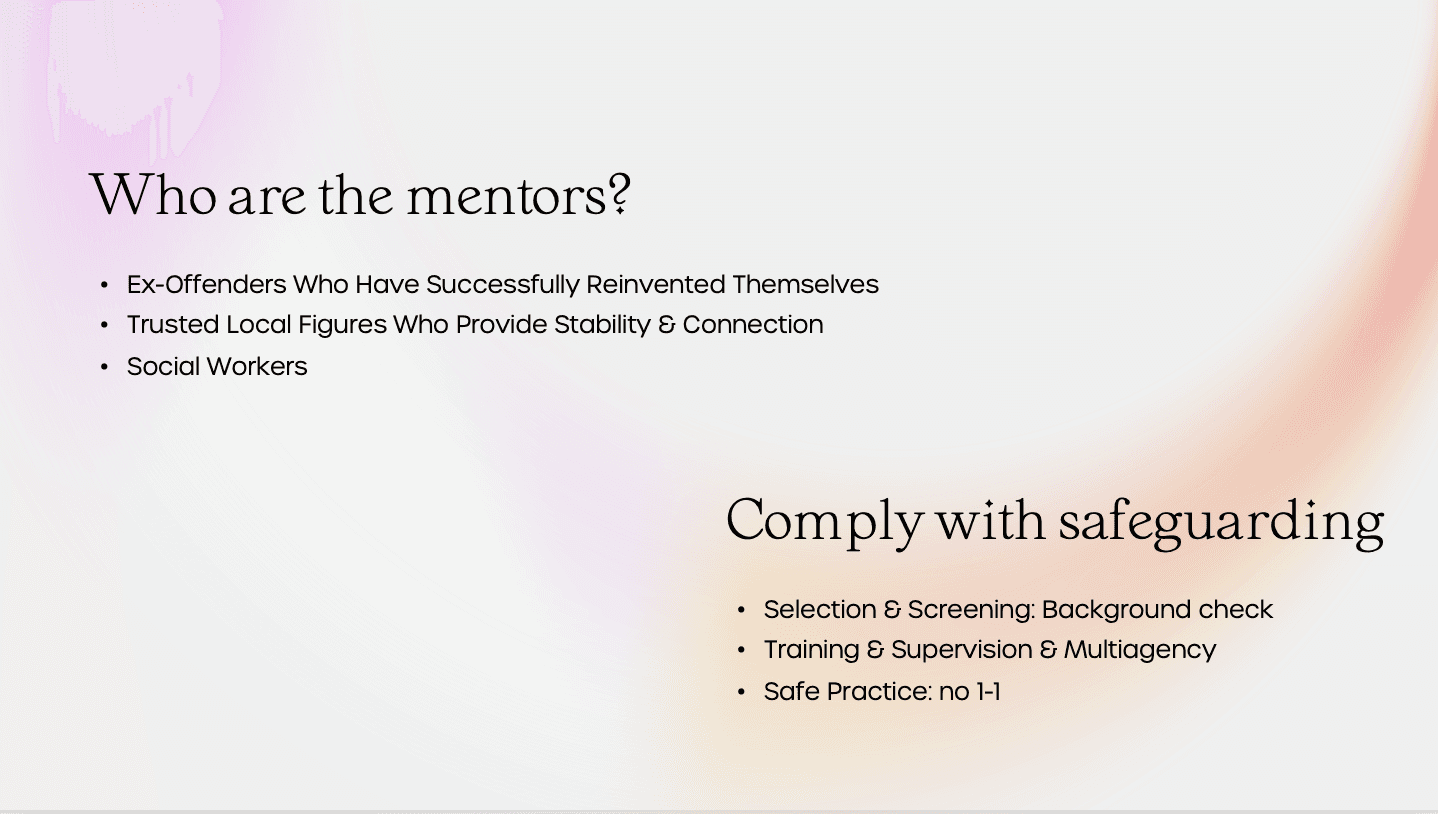
'Turning Point' is built on mentors who have lived the system, safeguarding that protects both parties.
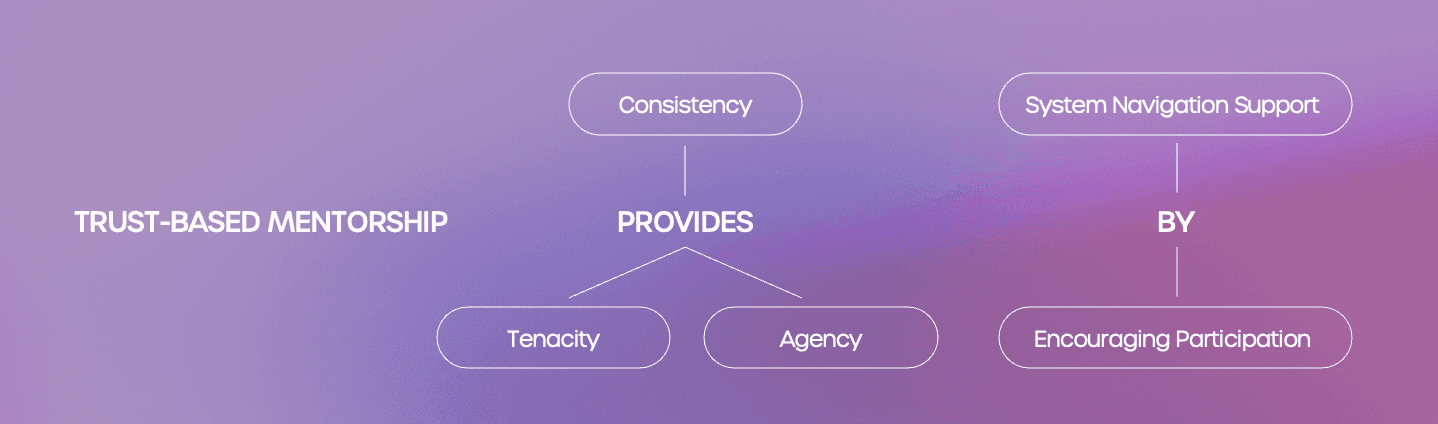
Youth justice is not a neutral service environment, so the project required explicit ethical framing. I positioned AI as an assistive rather than an authoritative force, keeping human mentors responsible for judgment and safeguarding. This was critical because automated systems can easily intensify stigma, bias, and institutional distance if left unchecked.
The intervention, therefore, focused on relational trust, trauma-informed delivery, and multi-agency safeguarding rather than purely digital efficiency. In a future where surveillance may be normalised, the design challenge was not how to make the system more controlling, but how to stop it from becoming less humane.
Backcasting
Working backwards from 2040, each milestone marks a policy shift that makes the next one possible.
Backcasting starts from a preferred future and works backwards to identify the systemic, policy, and behavioural shifts required to reach it. This approach enabled the project to translate a speculative 2040 rehabilitation vision into staged interventions, aligning short-term actions with long-term transformation. It reframes futures thinking as a strategic tool for decision-making today, not just exploration of what might be.

Learnings
Designing Beyond the Artefact
This project reinforced that service design in public systems extends beyond concept generation. While speculative methods surfaced long-term risks and shifting values, their relevance emerged only when translated into operational structures such as stakeholder alignment, safeguarding protocols, and a clear Theory of Change.
I learned that foresight becomes actionable only when grounded in causal logic. Moving from scenario-building to hypothesis stacks and blueprinting demonstrated how future thinking can inform present-day service architecture.
Working within youth justice also sharpened my understanding of designing under ethical and statutory constraints. Safeguarding, power asymmetries, and institutional mistrust directly shaped the intervention. In high-risk environments, innovation must remain accountable and trauma-informed.
Ultimately, this project strengthened my ability to operate at a systems level. Rather than designing isolated touchpoints, I focused on repairing fragmentation between justice, education, and community actors. Service design became relationship architecture, not interface design.